If you have ever tried on a foundation that matched your skin depth perfectly but still looked off, or wondered why certain lipstick shades make you glow while others make you look washed out, the answer almost certainly comes down to your undertone. Not your surface skin color, but the subtle hue underneath it.
Understanding your undertone is one of the most useful things you can learn about your appearance. It affects which makeup shades flatter you, which clothing colors make your skin look healthy, and which metals complement your complexion. Yet most people have never been taught how to identify theirs. Department store shade matching tends to focus on depth (light, medium, dark) and ignores the warm-versus-cool dimension entirely. The result is millions of people wearing foundation, blush, and lip colors that technically match their skin but somehow still look wrong.
This guide will teach you the most reliable methods to determine your undertone at home, explain the three undertone categories plus the olive modifier in detail, and show you how to apply this knowledge to your makeup routine.
Find your undertone instantly with BeautySparkWhat Is an Undertone?
Your skin has two layers of color that matter for makeup and fashion. The first is your surface tone: the overall depth and shade of your skin that you can see at a glance. This is what most people mean when they say "skin tone." It ranges from very fair to very deep and can change temporarily with sun exposure, inflammation, or seasonal shifts.
The second layer is your undertone: the underlying hue that sits beneath your surface color and remains constant throughout your life. Your surface tone can darken in summer and lighten in winter, but your undertone stays the same. Think of it like the tint of a window: no matter how much light changes outside, the glass itself has a fixed color cast.
This distinction matters because two people can have the same surface depth (both "medium" on a foundation chart) but completely different undertones. One may have warm, golden undertones that glow in peach blush and gold jewelry. The other may have cool, rosy undertones that look best in berry blush and silver accessories. Put the wrong undertone in the wrong product, and the result is makeup that looks muddy, ashy, or disconnected from the skin, even though the shade technically "matches."
Dermatologists and color scientists generally recognize that skin undertone is determined by the relative concentration of melanin, hemoglobin, and carotenoids in the deeper layers of the skin. Melanin contributes brown pigment, hemoglobin adds pink and red, and carotenoids contribute yellow and orange. The specific ratio of these pigments in your skin creates your undertone, and since that ratio is largely genetic, it does not change with tanning, aging, or skincare.
Reliable Ways to Find Your Undertone
No single test is definitive on its own. The most accurate approach is to try several of the methods below and see where the results converge. If multiple tests point toward warm, you can be confident in that result.
For all of these tests, one rule is critical: use natural daylight. Stand near a window during the day, ideally when the sky is overcast or you are in indirect light. Artificial lighting (especially warm incandescent bulbs or cool fluorescent tubes) adds its own color cast to your skin and can throw off every test.
1. The Draping Test (Most Reliable)
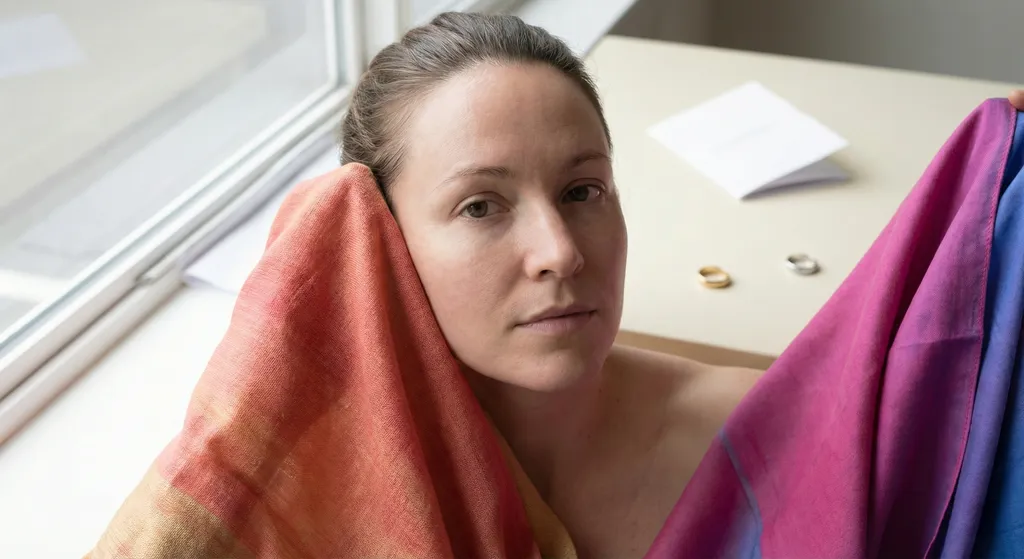
Draping is the method professional color analysts use, and it is the most reliable of the DIY approaches. You will need a few pieces of fabric or large scarves, at minimum one warm-toned (orange, warm red, golden yellow) and one cool-toned (fuchsia, cool blue, emerald).
Sit in front of a mirror in natural light with your hair pulled back and no makeup on. Hold each fabric close to your face, directly under your chin, and observe the effect on your skin:
- Warm fabrics make you glow. If the warm-toned drapes make your skin look even, healthy, and luminous, and the cool-toned drapes make you look washed out, tired, or blotchy, you have a warm undertone.
- Cool fabrics make you glow. If the cool-toned drapes brighten your complexion and make your eyes pop, while the warm-toned drapes make your skin look sallow, yellowish, or dull, you have a cool undertone.
- Both warm and cool work reasonably well. If you look good in both temperature families without a dramatic difference, you are likely neutral.
The key is to watch what happens to your skin, not the fabric. Ignore whether you "like" the color and instead focus on whether the fabric makes your skin look healthier or unhealthier. When you hit the right temperature family, the effect is often described as the skin looking "lit from within."
For a quick version, hold something orange next to your face. If your face looks refreshed and slimmer, you likely lean warm. Then try a cool blue item. If your face looks better here, you likely lean cool.
You may have heard that checking your vein color is a reliable way to determine undertone. It is not. Vein color is affected by skin thickness, fat distribution, and lighting, and it tells you very little about the pigments that actually determine your undertone. Ignore this test.
2. The Jewelry Test (Supporting Indicator)
This test uses the reflective quality of metals as a supporting data point, not a primary method. You will need a piece of gold jewelry and a piece of silver jewelry, ideally similar styles so the comparison is fair.
Hold each piece against your bare skin (wrist, neck, or decolletage) in natural light and observe the effect:
- Gold flatters your skin. If gold jewelry makes your complexion look warmer, smoother, and healthier, you likely lean warm.
- Silver flatters your skin. If silver or platinum jewelry brightens your complexion and makes you look more vibrant, you likely lean cool.
- Both look equally good. If you honestly cannot tell a difference, or if both metals seem to work, you likely lean neutral.
A few important caveats: different shades of gold (rose gold vs yellow gold vs champagne gold) and silver (bright silver vs pewter vs white gold) can give different results. The jewelry test is most useful as confirmation of your draping results, not as a standalone method. Most people have an instinctive preference for gold or silver without knowing why. That instinct is often your undertone expressing itself, but it is not always reliable.
3. The White Paper Test
This method uses a neutral reference point (pure white) to make your skin's undertone more visible by contrast.
Hold a plain white sheet of paper (printer paper works perfectly) next to your bare face in natural light. Look at your skin next to the white surface and note the cast:
- Your skin looks yellowish or peachy next to the paper: warm undertone.
- Your skin looks pinkish or rosy next to the paper: cool undertone.
- Your skin looks greyish or ashy next to the paper: this can indicate an olive cast (a green modifier, not a true undertone; see below).
- You do not see a strong pull in any direction: neutral undertone.
This test works because pure white is a true neutral. It has no color bias of its own, so whatever cast you perceive in your skin is coming from your actual pigmentation rather than from environmental color interference. That said, this test requires honest self-assessment and can be subjective: it is easier to see the cast on someone else than on yourself. Have a friend help if you can.
A Note on the Sun Reaction Test
You may see advice that your sun reaction (whether you tan or burn easily) indicates your undertone. This method has real limitations. Sun reactivity is influenced by many factors beyond undertone, including melanin density and distribution, which varies significantly across ethnicities regardless of underlying hue. It is not reliable enough to recommend as a primary or even secondary method. Stick with draping and the tests above.
Avoid these common mistakes
The two most frequent errors in DIY undertone testing are using artificial light and confusing surface redness with a cool undertone. Warm incandescent bulbs add a yellow cast that makes everyone look warm. Cool fluorescent lights add blue that makes everyone look cool. Always test in natural daylight. Fabric draping near a window is the most reliable method. Additionally, if you have rosacea, acne, or flushed cheeks, that surface redness is not the same as a cool undertone. It is temporary inflammation on top of whatever undertone you naturally have. Focus on areas of your face without redness, like your jawline or forehead, when evaluating your undertone.
Warm, Cool, Neutral, and the Olive Modifier
Now that you have tested yourself, here is what each undertone category actually looks like and how it affects your best colors.
Warm Undertone
Warm-toned skin has a golden, peachy, or yellowish cast beneath the surface. If you hold your arm next to someone with cool undertones, you will notice that your skin leans toward gold while theirs leans toward pink, even if you are the exact same depth.
Characteristics: Warm-toned fabrics (orange, coral, golden yellow) make your skin look healthy and luminous when draped near your face. Gold jewelry looks more flattering than silver. Skin tans to a golden or bronze shade. Earth tones, warm reds, corals, and orange-based colors tend to be the most flattering.
Common in: All ethnicities. Warm undertones are found across every skin depth, from very fair with a peachy glow to very deep with rich golden or bronze tones.
Cool Undertone
Cool-toned skin has a pink, rosy, or bluish cast beneath the surface. The skin may flush easily and often has a porcelain or alabaster quality in lighter depths, or a deep blue-brown quality in darker depths.
Characteristics: Cool-toned fabrics (fuchsia, cool blue, emerald) make your skin look brighter and more vibrant when draped near your face. Silver jewelry looks more flattering than gold. Skin burns more easily and may tan slowly or with a pinkish cast. Jewel tones, cool reds, berry shades, and blue-based colors tend to be the most flattering.
Common in: All ethnicities. Cool undertones exist across the full spectrum of skin depths and are not limited to fair skin, despite the common misconception.
Neutral Undertone
Neutral undertones sit at the midpoint between warm and cool. Your skin does not pull strongly in either direction, which gives you the widest range of flattering colors. Neutral is not the absence of an undertone. It is a balanced blend of warm and cool pigments.
Characteristics: Both warm and cool fabrics look reasonable when draped near your face, with no dramatic difference. Both gold and silver jewelry look equally good. Skin may tan moderately. Muted and balanced shades work well, and you can usually wear colors from both the warm and cool families without looking obviously wrong.
Common in: All ethnicities. Neutral undertones are sometimes the hardest to identify precisely because neither warm nor cool tests produce a strong signal.
Olive: A Modifier, Not an Undertone
Olive is perhaps the most misunderstood term in skin-color analysis. Strictly speaking, olive is not an undertone. It is a green or gray cast layered on top of your actual warm, cool, or neutral undertone. This cast is produced by a specific optical mix of melanin and hemoglobin pigments that, combined, create a greenish or ashen quality visible at the skin's surface.
Because the green cast is a separate dimension from the warm–cool axis, you can be warm-olive (golden green, leaning toward peach and gold), cool-olive (gray green, leaning toward pink and blue), or neutral-olive. This is why olive-toned people often struggle to find foundation: most formulas are built for the warm–cool spectrum alone and don't account for the additional green modifier. Because it sits on top of your undertone rather than replacing it, olive is best described as an overtone. Our olive skin and color season guide explains which of the 12 seasons olive skin most often lands in.
How to spot it: Skin appears greenish or gray-ish next to a white reference. The white paper test shows an ashy or greenish cast rather than a clear yellow or pink. Many warm and cool colors can look too saturated or "off" against olive skin. Muted, earthy tones and teal-based colors often work exceptionally well. For the full list of visible signs and confirming tests, see do I have olive skin.
Common in: Mediterranean, Middle Eastern, South Asian, East Asian, and Latin American heritage, though the olive cast can appear in any ethnicity. It is often mistaken for a warm undertone because of the visible yellow pigment, but the green component is what distinguishes it.
Not sure about your undertone?
BeautySpark uses AI to analyze your selfie and determine your undertone, color season, and best makeup shades. No guesswork required.


How Undertone Connects to Color Analysis
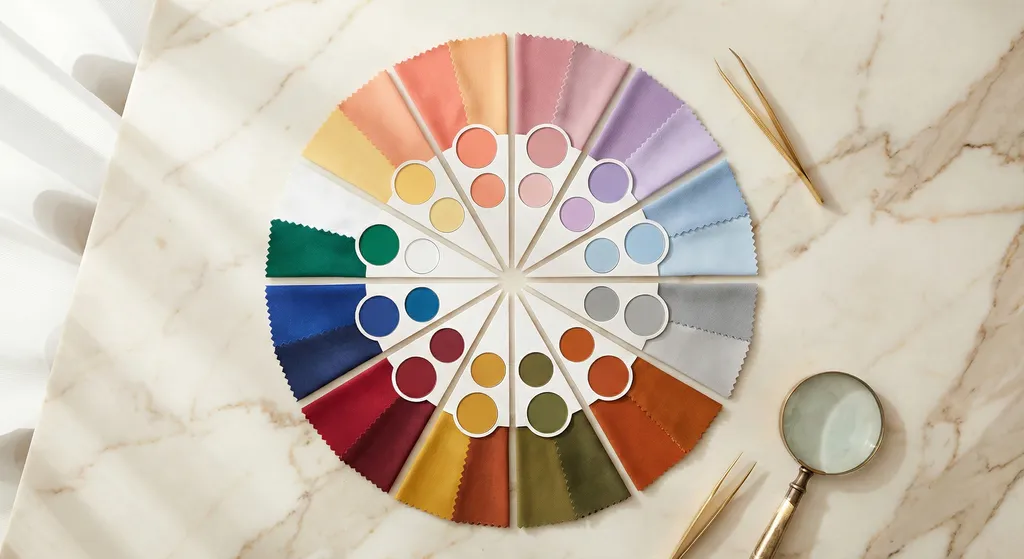
If you have read about the 12-season color analysis system, you may be wondering how undertone fits into the bigger picture. The answer is straightforward: undertone is the temperature axis of color analysis.
The 12-season system classifies personal coloring along three dimensions:
- Temperature (undertone): warm or cool. This is what you just tested.
- Value: light or dark. This refers to the overall depth of your skin, hair, and eyes.
- Chroma: muted or bright. This describes how saturated or soft your natural coloring appears.
Your undertone determines which seasonal family you belong to. Warm undertones place you in the Spring or Autumn family. Cool undertones place you in the Summer or Winter family. Neutral undertones typically land in a season that borders the warm-cool divide, such as Soft Summer (cool but close to neutral) or Soft Autumn (warm but close to neutral).
From there, your value and chroma narrow you down to one of three sub-seasons within that family. For example, if you have a warm undertone, light coloring, and high chroma, you are likely a Bright Spring. If you have a cool undertone, medium depth, and muted chroma, you are likely a Soft Summer.
This is why identifying your undertone is such an important first step. It eliminates half the seasonal palettes immediately and gives you a clear starting direction for finding your full color season. Once you know your temperature, you are already halfway to your season.
Applying Your Undertone to Makeup
Knowing your undertone transforms makeup shopping from guesswork into a system. Here is how to apply it across every category.
Foundation
Foundation is where undertone matters most and where getting it wrong is most visible. A foundation can match your skin depth perfectly and still look unnatural if the undertone is off. Warm-undertoned foundations have names and descriptions that include words like "golden," "warm," "honey," "caramel," and "sand." Cool-undertoned foundations use words like "porcelain," "rose," "cool," "ivory," and "cocoa." Neutral foundations are often labeled "neutral" or "beige" and split the difference.
To test a foundation match, swatch it on your jawline in natural light. The correct shade and undertone will virtually disappear into your skin. If it looks orangey, the formula is too warm for you. If it looks pinkish or ashy, it is too cool.
Eyeshadow
Warm undertones harmonize with eyeshadow palettes that feature warm browns, coppers, golds, warm taupes, peaches, and warm greens. Cool undertones are flattered by cool taupes, mauves, plums, silvers, cool pinks, and blue-toned grays. Neutral undertones can typically wear either family, though they often look best in shades that are not aggressively warm or cool, such as soft rose golds, balanced taupes, and medium-toned neutrals.
The transition shade (the shade you use to blend in the crease and create depth) is where undertone shows up most clearly. A warm brown transition shade on a cool-undertoned person can make the entire eye look muddy. Switching to a cool taupe or mauve transition shade makes the same eye look polished and clean.
Lipstick
The same undertone rule applies to lips. Warm undertones glow in coral, warm pink, peach, warm red (orange-based reds), and nude shades with a peachy or golden tint. Cool undertones are flattered by berry, plum, cool pink, cool red (blue-based reds), and nude shades with a pinkish or mauve tint. If a nude lipstick makes you look like you have been out in the cold, it is the wrong undertone. If a red lipstick looks clownish despite being the right depth, it is probably the wrong temperature.
Blush
Blush should mimic the natural flush your skin produces. For warm undertones, that flush is peachy, coral, or warm rose. For cool undertones, it is rosy pink, mauve, or berry. When blush matches your undertone, it looks like a natural extension of your skin. When it clashes, it sits on top of the skin like a stripe of mismatched color.
Bronzer and Highlighter
Warm undertones pair best with golden, honey-toned bronzers and warm gold highlighters. Cool undertones look more natural with taupe or cool brown bronzers and silver or icy pink highlighters. One of the most common mistakes is using a warm, orangey bronzer on cool-toned skin, which creates a disconnected, muddy effect that reads as "dirty" rather than "sun-kissed."
How BeautySpark Helps
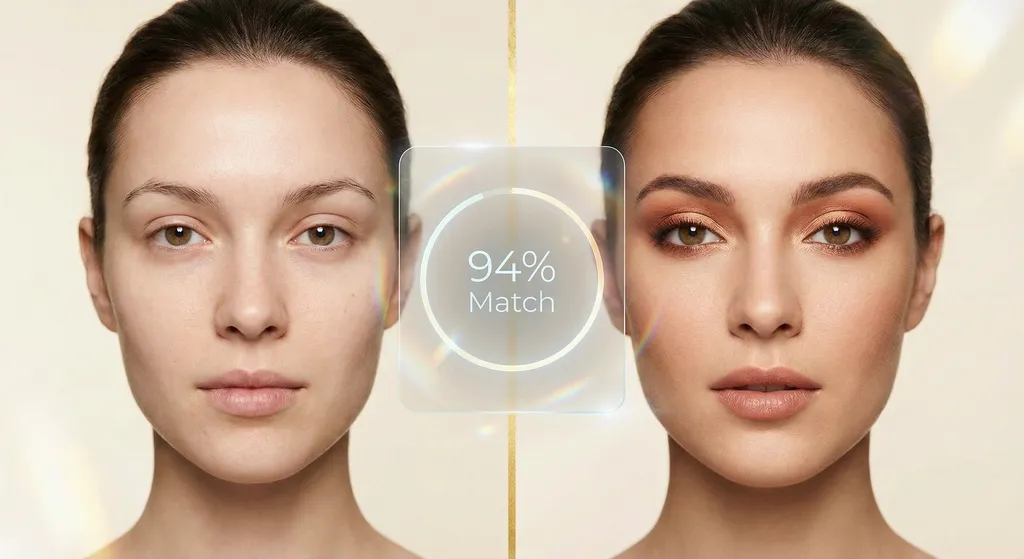
Identifying your undertone by eye can be tricky, especially for people who fall close to the boundary between categories. BeautySpark removes the guesswork by analyzing your selfie with AI to detect your undertone, determine your full 12-season color palette, and generate personalized makeup looks that are guaranteed to harmonize with your natural coloring. The entire process takes under five minutes and uses the same color science principles that professional analysts charge hundreds of dollars to apply. If you want to compare BeautySpark against other tools that promise the same thing, our best seasonal color analysis apps comparison breaks down the leading options, and the Dressika comparison is a useful reference if you have been eyeing that one specifically.
Frequently Asked Questions
Ready to Know Your Undertone for Certain?
Download BeautySpark and get your AI-powered undertone analysis, full 12-season color palette, and personalized makeup looks in under five minutes.