There's a common misconception in the beauty world about what "olive" truly means, and if it even matters. The makeup industry has spent years treating olive as a make-or-break fact, the kind of thing that supposedly demands its own colors, its own foundations, its own set of rules. It doesn't. Being olive does not change your color season, and it is not a prerequisite for wearing makeup beautifully. It was made to feel like one, and the loudest voices on the subject tend to be the ones overselling it.
So here's the honest answer first: you really don't have to care about this. If you match your makeup to your season, you're already winning, and you can close this tab with nothing missing. But if you're curious, if you want to understand your own skin a little better, or maybe hunt down the one extraordinary shade in your seasonal palette (because everyone has a shade that doesn't just flatter, and it's never the same one for everyone), then read on.
So, what is olive? It is a green, yellow, or gray-green cast that sits on top of your warm, cool, neutral-cool or neutral-warm undertone. It is an overtone, not an undertone. Knowing that you are olive doesn't replace your color season. Your olive skin still belongs to a season, since seasons are established based on undertones, not overtones.
Overtone vs Undertone: The Distinction Most Color Guides Miss
The language around skin tone gets tangled quickly. Undertone, overtone, surface tone, and "neutral" often get used interchangeably, which is why so many people with olive skin end up confused about where they fit. Sort those words out and the rest of this becomes easy.
What an Undertone Is (and Why It Does Not Change)
Your undertone is the pigment mix beneath the surface of your skin. It is set by the blend of melanin, hemoglobin, and carotenes your body produces, and it does not shift with a tan, the time of year, or a bad night's sleep. Undertones are usually described along a warm-to-cool axis: warm undertones lean golden or peachy, cool undertones lean pink or rosy, and neutral undertones sit in the spectrum between these often manifesting as cool with a touch of warmth or warm with a touch of cool.
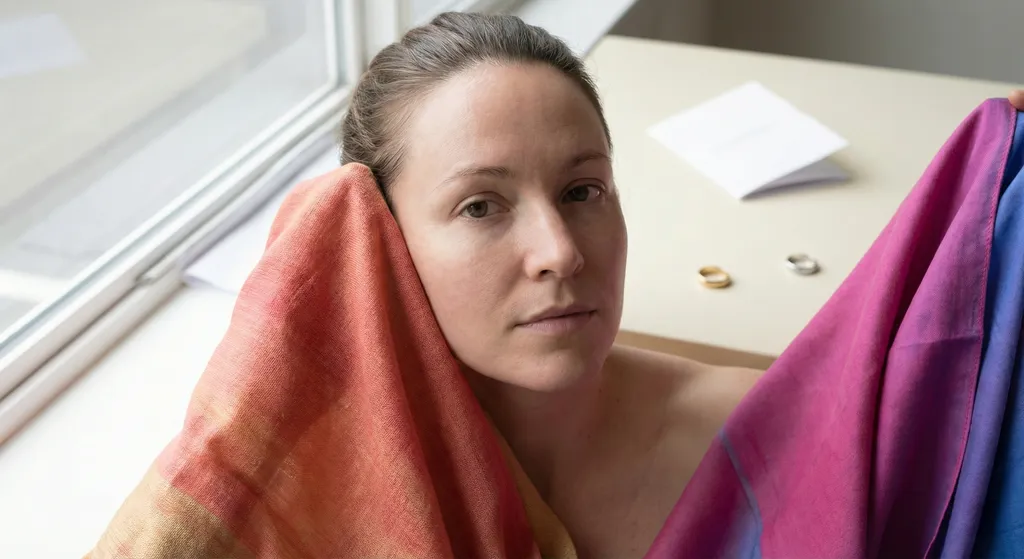
Undertone is structural, so it anchors every color-analysis decision. When a stylist drapes a piece of warm-toned fabric under your jaw, they are reading how your undertone responds, not how your surface looks that afternoon. If you want a full walk-through of how to pin yours down, learn how to identify your undertone before you try to classify your olive cast.
What Olive Actually Is: A Green-Yellow-Gray Overtone
Olive is a different layer entirely, a green, yellow, or gray-green cast sitting in the outer layers of the skin that softens and mutes the surface. The color you see on top is the result of how that overtone pigment combines with the undertone beneath it. Someone with a neutral-cool undertone (blue-based) carrying a yellow overtone, for example, ends up with the green or gray-green cast most people recognize as olive.
The cast can appear over any base. A cool olive shows a green-gray veil over a pink-based undertone. A warm olive shows a green-gold veil over a golden-yellow one. What reaches the surface shifts with the pairing, but the undertone underneath keeps driving every color-analysis decision.
Why the "Olive Is Neutral" Myth Persists
Many guides collapse olive into "neutral undertone," and you can see why. The green-gray surface cast blurs the usual visual cues for warm or cool, which makes olive skin hard to guess at, especially when people try to establish it themselves, and unfortunately even makeup counter staff can get caught by it.
That shortcut costs people with olive skin accuracy. Olive is not a synonym for neutral undertone. Plenty of olive complexions sit firmly on the cool side, and plenty sit firmly on the warm side. Lump them all into "neutral" and you end up with palette recommendations that look fine in the swatch book and slightly off in the mirror.
Olive is a surface overtone, never an undertone, so it does not decide your season; your undertone does, and olive complexions sit on the cool side just as often as the warm.
Can You Have a Cool Olive? Can You Have a Warm Olive?
Yes to both. The olive overtone can sit over any undertone, and confirming which version you have is more useful than guessing your season straight off the surface cast. If you haven't confirmed you're olive at all yet, these signs and tests walk through how.
Cool Olive: Green Over a Blue-Pink Undertone
A cool olive reads as green-gray rather than green-gold. Under most lighting, the skin looks slightly muted and ashy, with pink or rose coming through in the cheeks and the thinner skin around the eyes. Under cool fluorescent or low-warmth lighting, the gray cast can intensify and the skin can read flatter than it does in neutral daylight.
Warm Olive: Green Over a Gold-Yellow Undertone
A warm olive reads as green-gold rather than green-gray. The surface still has the characteristic olive mute, but a golden warmth pushes through it. In warm light, warm olives often look bronze or honey-adjacent. In cool light, the green cast becomes more obvious and the gold steps back.
How to Confirm Your Olive Variant
The reliable way to confirm your variant is draping, which reads your undertone directly rather than the surface cast. A full walkthrough lives in the undertone guide, so read that before spending hours in front of a mirror.
A useful supporting check is the white-paper test. Hold a sheet of printer-white paper right under your jaw in north-facing daylight. A cool olive tends to throw a gray-green or ashy cast against the paper. A warm olive tends to throw a yellow-green cast. The paper is a neutral reference, which makes the overtone easier to read than a bare wall.
Jewelry preference can act as a weak tiebreaker, but only that. Many olives look flattering in both gold and silver because the green surface softens both metals, so this test is suggestive at best.
Two tests worth skipping: the vein test and the sun-reaction test. Older guides often recommend the vein test, but it is unreliable as a general diagnostic for everyone, not only olive complexions. Veins read the skin above them rather than the undertone beneath, so the colors you perceive depend on skin opacity, capillary depth, and lighting as much as anything else. Olive complexions showing blue-green veins regardless of their underlying undertone is one example of why the test fails. The sun-reaction test is also unreliable since outcomes depend on sunscreen habits, time of year, and genetics rather than undertone alone.
Use draping as the primary diagnostic and the white-paper test as support; the vein and sun-reaction tests are unreliable for everyone, not only olive complexions.
Which Color Seasons Olive Skin Commonly Lands In
Olive can appear in any of the 12 seasons. The four below are the ones most commonly cited in color-analysis literature, which is not the same as being the only four where olive shows up. Treat them as a starting shortlist, and confirm your actual season through a proper analysis, not by matching yourself to a description.
Soft Autumn: Muted, Warm-Leaning Olive
Soft Autumn is a warm-neutral season built around low-chroma, earthy shades like sage, warm moss, soft camel, muted brick-rose, and dusty peach. Warm olives, with their subdued green-gold surface, are commonly observed here.
For the full palette and season behavior, see our Soft Autumn makeup palette guide.
Soft Summer: Muted, Cool-Leaning Olive
Soft Summer sits on the cool side of neutral with the same low-chroma quality as Soft Autumn, running to cool taupes, muted mauves, grayed roses, and soft plums. Cool olives are frequently observed here.
For a fuller breakdown, see our Soft Summer colors guide.
True Autumn: Saturated, Warm-Leaning Olive
True Autumn is fully warm and carries more chroma than Soft Autumn, with a palette of warm bronze, forest green, pumpkin, warm brick, and burnt terracotta. Warm olives, often with deeper complexions, are commonly observed here.
See True Autumn shades for the full palette.
Dark Winter: Deep, Cool-Leaning Olive With High Contrast
Dark Winter is cool, high-contrast, and high-chroma, built on plum-black, cool berry, ice blue, true white, and deep teal. Cool olives, particularly those with deeper complexions are commonly observed here.
The full palette is in the Dark Winter guide.
Olive Can Appear in Other Seasons Too
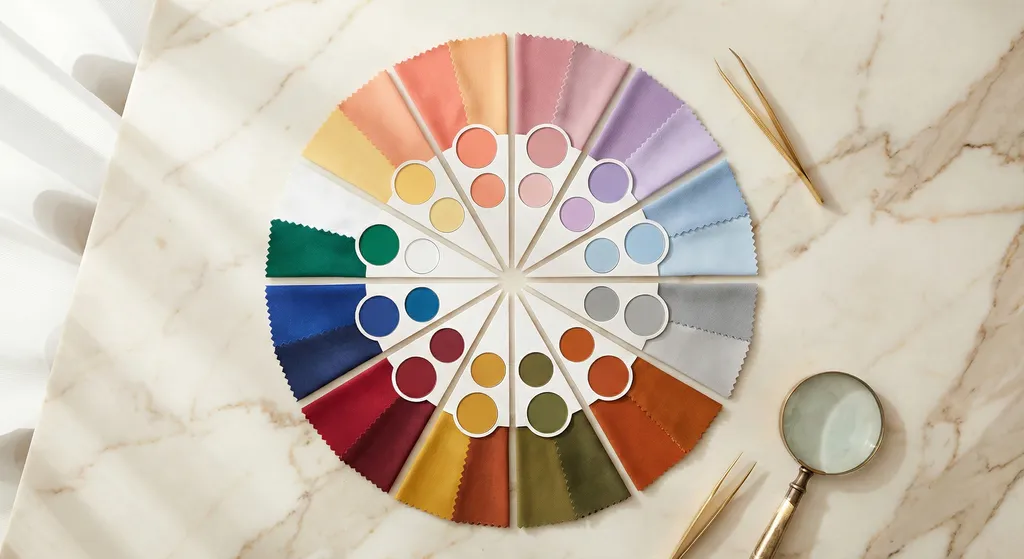
These four are not the full list. Olive overtones show up in Bright Winter, Dark Autumn, True Summer, and elsewhere. The 12-season system is a framework, not a menu, and the 12-season color system includes room for plenty of olive variations that never get highlighted in olive-specific articles.
Olive commonly shows up in Soft Autumn, Soft Summer, True Autumn, and Dark Winter, but any of the 12 seasons can host an olive overtone.
Makeup Adaptations That Enhance Olive Skin
We've been led to believe there are special adaptations every olive should be making, and that they flatter all olives universally. This couldn't be further from the truth, and it can end in disaster. Defaulting to terracotta, warm brick, or sun-kissed bronzer for every olive overrides seasonal analysis and leaves plenty of cool olives wearing colors their season explicitly calls unflattering. Warm olives, on the other hand, will look great in bronzed, sun-kissed shades. That's the whole point: these "universal" olive guidelines are not universal at all.
So if you want to make any adaptations for olive skin that actually flatter you, start within your season. You might try the more dusty, muted shades over the brighter ones in your palette. Truly though, there isn't a specific rulebook. The best rule is to not follow the universal rules for olives.
Foundation: Match the Undertone, Don't Chase the Exact Surface Cast
The biggest foundation myth around olive skin is that the shade has to replicate your exact skin tone, green cast included. It does not. When undertones match, foundation sits quietly on the face, especially in sheer to medium coverage where the natural cast still shows through. Chasing an exact olive surface match often lands you in an ashy or gray foundation that fights your face instead of evening it out.
The reliable test is an old one. Swatch two or three candidates on the jawline, step into natural light, and blend each into the skin. The shade that disappears is the match. Shop-light swatches and back-of-hand swatches are not reliable.
For most people that match holds against both the jaw and the neck, and that's the whole answer. But not everyone is uniform from face to neck, and if you're one of them, matching to your neck instead of your face is a perfectly valid choice. Say your face carries a stronger green cast and your neck runs pinker. Match to the face and you'll need to take foundation down over the neck to keep things cohesive. Match to the neck and the foundation only sits on the face, with nothing to blend out below the jaw. Either way the goal is uniform and cohesive from jaw to chest. Pick whichever match gets you there with less work.
And if the closest shade you find is very close but not exact, you don't have to buy a whole new foundation to chase the last bit. A drop of color-correcting mixer can nudge an almost-match in the right direction. Keep it to a small adjustment, just shifting the shade a touch, not overhauling it into something that fights your face. If you're reaching for a lot of corrector, the base shade is wrong, and no amount of mixing will save it.
A caution on "olive-targeted" foundations. Several brands formulate dedicated olive or yellow-green lines, and the results are uneven. Over-corrected greens can pull ashy or gray, especially in photos, and some olive lines skew warmer than your actual undertone. We are not endorsing the category as a shortcut. Match the undertone, test on the jaw (or neck), and trust that the surface cast will read correctly when the foundation is right.
Eyes, Blush, and Lips: Your Palette Already Has the Answer
Here's the part most olive guides overcomplicate. You don't need a separate eye list, blush list, and lip list for being olive. Your seasonal palette already holds the answer.
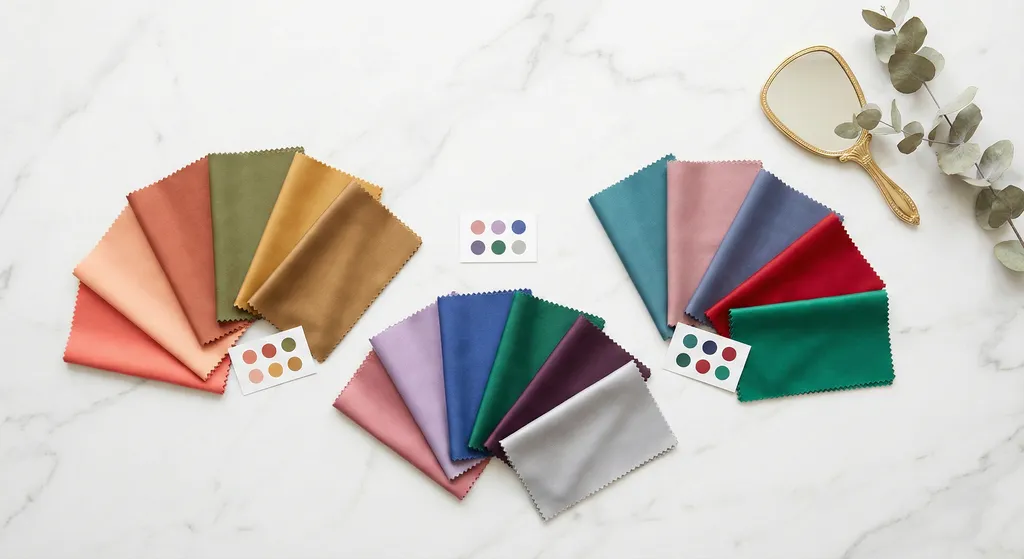
What being olive does, if anything, is point you toward the shades in that palette that will look not just good but genuinely incredible on you. If you believe you have an olive overtone, explore the more muted and dustier shades in your seasonal color palette.
Skip the palette guesswork. BeautySpark reads your color season from a selfie and generates eye makeup tutorials built around it.There is no universal olive makeup formula; start inside your season's palette.
Frequently Asked Questions
Find Your Color Season Without the Guesswork
BeautySpark analyzes your color season from a selfie and generates personalized eye makeup tutorials around sample season colors. Built for every overtone and undertone, including olive.