The 90s produced eye techniques that actually held up: the cappuccino smoky, the metallic lid, the lower-lash pencil smudge. All of them still work in 2026. The problem is that the originals were developed on specific coloring and rarely adapted for anyone else. These 90s makeup looks have two distinct camps (warm-smoky and cool-smudge), and which camp you belong to depends entirely on your color season.
Identify your color season with BeautySparkWhy 90s Makeup Looks Still Work, and Why They Don't Always
The 90s were not a single aesthetic. Two camps ran in parallel, shaped by entirely different cultural references.
The warm-smoky camp and the cool-smudge camp
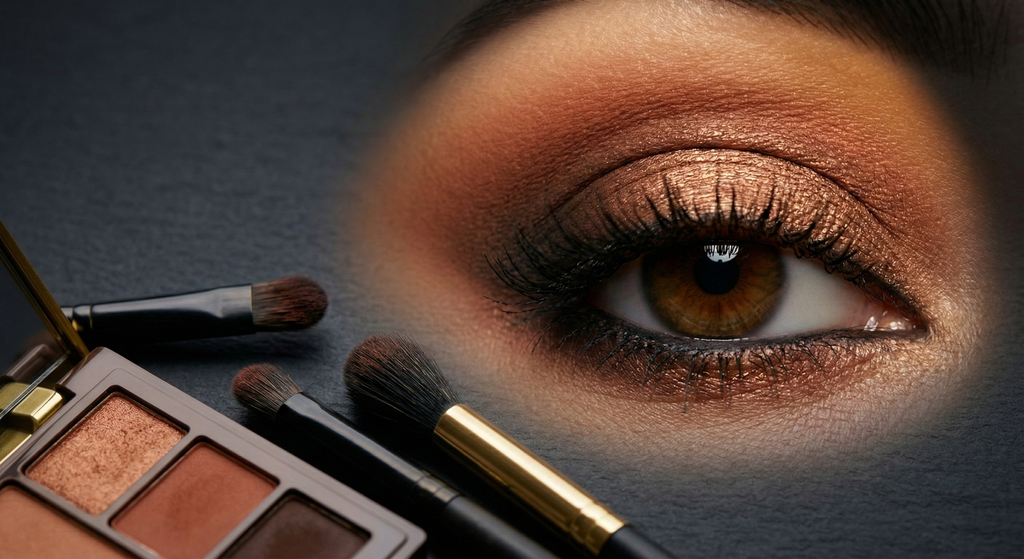
The warm-smoky camp drew from the supermodel era: Cindy Crawford's blended cappuccino socket, Jennifer Lopez's bronze metallic lid, the terracotta tones that looked both glamorous and natural on warm, high-contrast coloring. The look relies on matte brown or terracotta blended at the socket, a sheer shimmer on the lid, and relatively clean lower lashes.
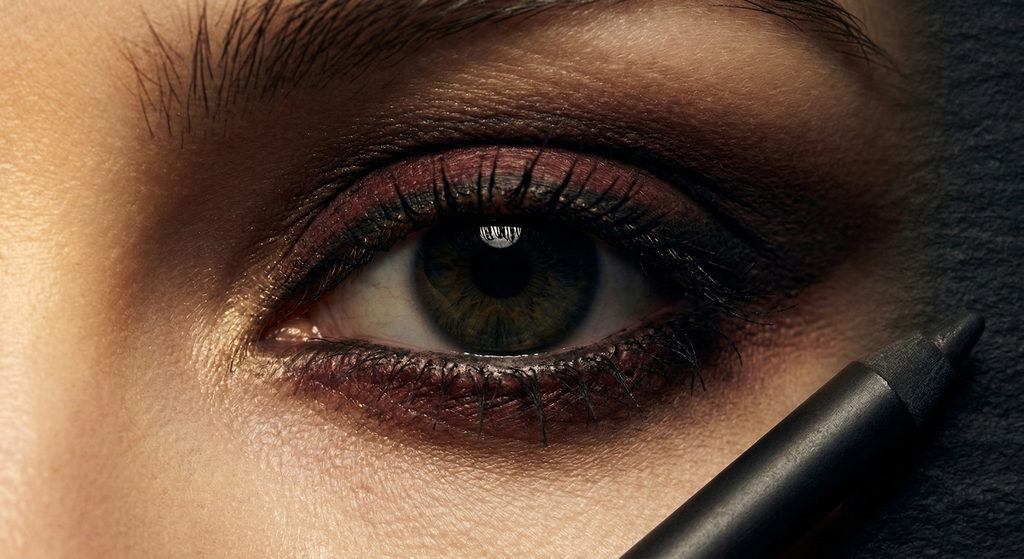
The cool-smudge camp came from grunge and indie film: Drew Barrymore's smudged kohl under the lower lash, Winona Ryder's diffuse pencil liner, Courtney Love's deliberately undone eye. The look relies on a soft pencil or kohl smudged outward along both lash lines, little or no distinct crease work, and mascara on the lower lashes.
Why the divide maps to warm and cool color seasons
The warm-smoky camp uses brown, bronze, and terracotta, all warm-undertone shades that look harmonious on warm coloring (Spring and Autumn) and discordant on cool coloring. The cool-smudge camp uses charcoal, gray, and blue-black, all cool-undertone shades that work for Winter and Summer and produce an ashy, unresolved result on warm coloring.
Knowing which camp your season belongs to tells you which half of 90s beauty is actually available to you, and which half has been producing disappointing results every time you try it.
The warm-smoky camp belongs to Spring and Autumn seasons; the cool-smudge camp belongs to Summer and Winter. Choosing the wrong one is why 90s makeup tutorials frequently produce results that feel wrong without any obvious reason.
The Core 90s Makeup Looks and Eye Techniques
Before adapting by season, it helps to understand the four base techniques the 90s generated. Each can be executed in any seasonal tone family once you know the warm and cool versions.
The cappuccino smoky eye
This is not a modern smoky eye. The classic 90s version uses one matte brown or taupe shadow blended at the socket with no distinct crease line: the goal is a soft diffusion of color across the upper lid, heaviest at the lash line and dissolving upward. Pencil liner along the upper lash line is pressed in and smudged instead of drawn precisely. The result looks smoky without the heavily blended three-color gradient of contemporary smoky tutorials.
Warm version: matte terracotta or warm brown at the socket; nude-bronze on the lid. Cool version: matte taupe or charcoal at the socket; nude-gray on the lid.
The sheer metallic lid
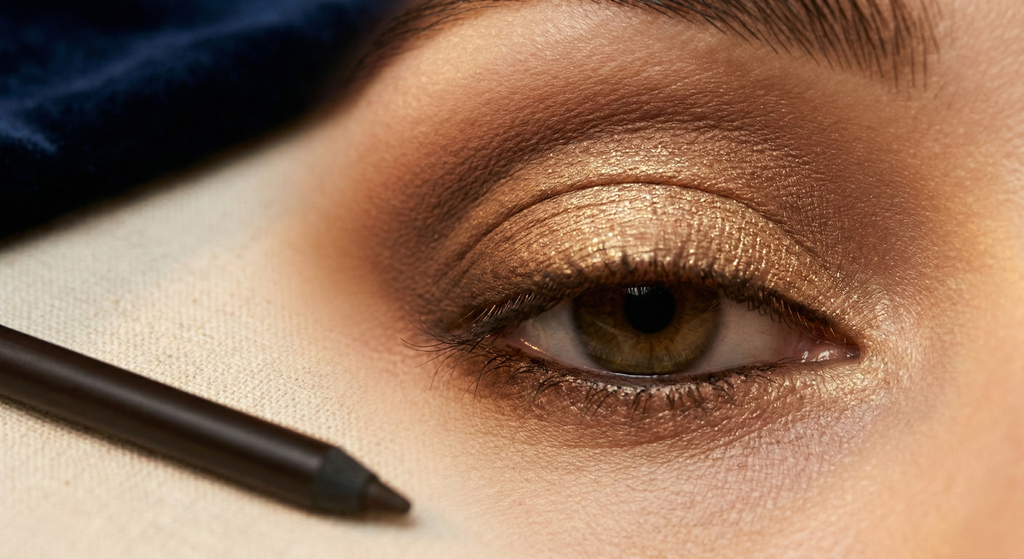
A wash of metallic shadow applied across the entire lid with little or no blending into the crease. The 90s version is deliberately sheer: a single pass of a metallic powder or pressed shadow, not a built-up foiled look. Heavy mascara and minimal liner. The metallic tone is the entire look.
Warm version: gold, copper, amber. Cool version: silver, pewter, rose-silver.
The pencil-smudge liner
Kohl or a soft pencil pressed directly into the upper and lower lash lines and immediately smudged outward with a fingertip or cotton swab. No sharp edges. The lower lash line carries the same weight as the upper, sometimes more. This is the defining technique of the cool-smudge camp and looks harsh and ashy on warm coloring when executed in gray-black.
Warm version: warm brown pencil smudged soft. Cool version: gray-black or near-black kohl, fully diffused.
The minimalist bare eye
The counterpoint to all the above: concealer-toned lid, brushed and lightly filled brow, mascara only. The supermodel "no-makeup" look. It works for every season because the execution varies by tonal choice (warm concealer-toned shadow on warm seasons, cool-toned on cool seasons), not any specific color placement.
These four techniques cover the full range of 90s eye makeup; which ones translate to your coloring depends entirely on your season's position in the warm-cool spectrum.
Adapting 90s Makeup Looks by Color Season
Spring Seasons: Golden Metallic and Warm-Camp 90s
Spring coloring is warm with a variable contrast range: Light Spring stays soft and sheer, True Spring carries medium warmth and intensity, Bright Spring can handle more saturation than the other two. All three seasons belong firmly in the warm-smoky camp.
For Spring, the cappuccino smoky uses peach-toned or warm taupe shadow at the socket instead of a deep brown, keeping the palette warm without going as deep as Autumn. The metallic lid is the strongest 90s look for Spring: a golden or champagne shimmer wash is directly in the season's warm-bright range. The pencil-smudge technique works only if the pencil is a warm brown, not gray-black.
Sub-season notes:
- Light Spring: keep all shades sheer; use a pale champagne metallic and a barely-there warm taupe at the socket
- True Spring: full golden metallic wash works well; can deepen the socket slightly with warm peach-brown
- Bright Spring: the most saturation of the three; copper metallic lid; warm amber-brown at the socket
Steps for the Spring 90s look:
- Apply warm peachy-nude blended shade through the socket using a fluffy brush; keep edges soft
- Press warm gold shimmer across the lid with a flat brush; no blending into the crease
- Smudge warm brown pencil or kohl along the upper lash line with a fingertip
- Optional: very light warm brown smudge along the lower lash line
- Build mascara on upper and lower lashes
Spring seasons produce the best results with the metallic lid technique; the warm gold shimmer is directly within the season's natural palette and looks more harmonious than any cool charcoal-smudge approach.
Autumn Seasons: Cappuccino Smoky and Amber Metallic
Autumn is the deepest warm season family and the natural home of the cappuccino smoky eye. The 90s warm-smoky camp was largely built on Autumn coloring: terracotta, bronze, warm espresso, deep amber. All three Autumn sub-seasons can go darker than Spring while remaining fully within the warm undertone range.
The cappuccino smoky sits especially well on Autumn because the matte brown socket blend matches the warm depth of Autumn coloring. The amber metallic lid deepens this further: where Spring uses gold, Autumn uses amber-bronze for greater depth. The pencil-smudge technique works with warm brown or oxblood kohl.
Sub-season notes:
- Soft Autumn: lightest of the three; moderate the socket depth; use a lighter amber instead of full bronze metallic
- True Autumn: the classic cappuccino smoky at full intensity; terracotta socket, amber metallic lid, warm brown kohl
- Dark Autumn: can push all shades deeper; deep espresso socket blending into near-black at the outer corner; darkest amber-bronze metallic; oxblood pencil liner
Steps for the Autumn 90s look:
- Blend terracotta or warm brown matte shadow through the socket with a fluffy brush; build gently to desired depth
- Press amber-bronze metallic across the lid as a sheer wash; can intensify with a second pass for Dark Autumn
- Line the upper lash line with warm brown or oxblood pencil; smudge outward with a fingertip
- Optional: warm brown smudge along the lower lash line
- Build mascara on both lash lines
Autumn seasons produce the most authentic version of the 90s cappuccino smoky: the matte brown socket blend and amber metallic lid were essentially designed for warm, rich coloring.
Discover Your Perfect Eye Look
Get your first AI-personalized look in under 5 minutes.


Summer Seasons: Mauve Smudge and Rose Metallic
Summer is the cool-muted counterpart to Autumn: cool undertones, lower contrast, and a preference for softened, not vivid, color. Summer belongs in the cool-smudge camp but requires the muted version of it: black kohl produces an undertone conflict on Summer, and more critically, the high contrast of a sharp black liner against Summer's soft coloring looks harsh, not dramatic.
For Summer, the pencil-smudge works in cool plum or soft charcoal-mauve instead of black. The metallic lid works well in rose-silver or soft pewter. The minimalist bare eye is especially strong for Summer: a concealer-toned lid and mascara looks perfectly polished and directly in the season's low-contrast range.
Sub-season notes:
- Light Summer: the softest of the three; use very sheer plum smudge and a pale rose metallic
- True Summer: can carry a moderate mauve smudge at full diffusion; rose metallic works at medium intensity
- Soft Summer: the most muted; keep the smudge minimal and the metallic very sheer. This season looks best with the minimalist bare eye or barely-there smudge
Steps for the Summer 90s look:
- Optional: blend cool mauve-taupe through the socket with a light hand; keep diffuse and airy
- Press rose-toned metallic across the lid as a single sheer pass
- Line the upper lash line with cool plum pencil; smudge outward immediately
- Smudge the same pencil along the lower lash line; keep it diffuse
- Build mascara on lower lashes to match the emphasis of the original cool-camp 90s technique
Summer seasons look best in the cool-smudge camp with rose-toned metallic and plum pencil: the muted cool palette keeps the 90s techniques in harmony with Summer coloring without the harshness of black.
Winter Seasons: Charcoal Smoky and Silver Metallic
Winter is the coolest and highest-contrast season family, and the original source material for the cool-smudge aesthetic. Winona Ryder's smudged kohl in the early 90s is effectively a reference image for True Winter coloring. Winter can carry all versions of the cool-smudge camp, including pure black kohl, with full harmony.
The charcoal or navy smoky and the silver metallic lid are both directly in the Winter range. The contrast between cool dark liner and Winter's high-contrast coloring produces the dramatic result that looks harsh on warmer, lower-contrast seasons. True Winter can go darkest; Dark Winter adds warmth with a slightly smoky charcoal-navy instead of pure black; Bright Winter can accent with an icy silver or cool lavender metallic.
Sub-season notes:
- True Winter: pure black kohl fully diffused; near-black charcoal at the socket; icy or pure silver metallic lid
- Dark Winter: the darkest sub-season overall; charcoal-navy smoky at the socket with near-black kohl; deep metallic (pewter or dark silver works better than bright icy silver)
- Bright Winter: highest saturation; icy silver metallic lid; pure black or deep charcoal kohl; can add a cool icy white or silver inner corner accent
Steps for the Winter 90s look:
- Blend cool charcoal-navy matte shadow at the socket; press in with a flat brush and blend edges upward with a fluffy brush
- Press icy silver metallic across the full lid as a sheer wash; Bright Winter can build intensity
- Rim the upper waterline and lash line with black or near-black kohl; smudge immediately outward
- Rim the lower waterline with the same kohl; smudge along the entire lower lash line
- Build multiple coats of mascara on both upper and lower lashes
Winter seasons are the original owners of the cool-smudge aesthetic: pure black kohl, charcoal socket, and silver metallic lid are all directly within the Winter palette and produce the intended dramatic result.
Eye Shape Adaptations for the 90s Look
Each of the four 90s techniques needs minor placement adjustments depending on eye shape. The same seasonal color choices apply; where things are placed is what shifts.
Hooded eyes
For the cappuccino smoky and the metallic lid, apply all color above the hood line: what sits on the hood when the eye is open is the only part visible. Blending must extend higher into the socket than a standard eye because the hood covers the lower crease when eyes are open.
Skip the lower waterline rimming technique or use only a very diffuse smudge along the outer half of the lower lash line. Heavy lower-line work closes down a hooded eye. Apply metallic shadow to the center of the lid only, not a full wash, so the shimmer works as a highlight, not a lid cover. Learn more about placement differences in our eye shapes guide.
Almond and round eyes
Both shapes handle the full range of 90s techniques without significant modification. The lower-lash smudge and lower-waterline rimming work particularly well on almond eyes, which can carry the lower emphasis of the cool-smudge camp at full intensity.
For round eyes, the cappuccino smoky should concentrate the darkest shade at the outer corner and outer V to create elongation. A metallic lid applied as a spotlight at the center instead of a full wash adds dimension without widening the eye further.
Monolid eyes
The sheer metallic lid and the pencil-smudge liner are the strongest 90s techniques for monolid eye shapes. For the metallic, bring the shimmer all the way to the inner corner: the inner corner highlight is where monolid eyes pick up the most visual dimension from a metallic technique.
For liner, use the upper waterline (tight-lining) instead of above-lash application. Press the pencil into the upper waterline and then smudge any excess upward. The lower lash line smudge works exactly as described for all seasons. Skip the socket-blend techniques that rely on a distinct crease: on a monolid, these blend into an indistinct shadow instead of a defined smoky edge.
The 90s eye techniques translate across all eye shapes with targeted placement adjustments: the sheer metallic lid and pencil-smudge techniques require the least modification and work consistently well regardless of eye shape.
The 90s Brow in 2026
The original 90s brow was pencil-thin, high-arched, and sometimes barely present. The heroin-chic aesthetic took the thin brow to an extreme that looks dated now, and the full natural microblading thickness of 2010–2020 feels like an overcorrection in the other direction.
The 2026 update keeps what aged well. The high arch still works: it looks delicate and frames the eye without competing with it. Drop the block-fill: a 90s eye isn't a bold brow look. Thin, groomed, and out of the way.
The fill tone is where the season adjustment happens. Warm seasons (Spring, Autumn) fill with warm taupe, a brownish-blonde that looks like a natural extension of warm hair and skin undertones. Cool seasons (Summer, Winter) use a soft gray-brown or cool ash taupe that matches the undertone of cool coloring without adding warmth where none exists. For color-season guidance on warm or cool undertone identification, a selfie-based analysis is the fastest route.
The arch height should reflect natural structure, not 90s over-plucking. If the natural arch is lower, don't force the high arch. Follow the natural line and apply the thin-but-groomed principle without imposing a period-specific shape.
The 90s brow in 2026 means thin but groomed, high-arched if it suits your natural structure, and filled with season-appropriate warm or cool taupe instead of the block-fill of the 2010s.
Quick-Reference: 90s Makeup Looks by Season
| Season Family | Smoky tone | Metallic tone | Liner/smudge | Brow fill |
|---|---|---|---|---|
| Spring | Warm peach-taupe (soft) | Warm gold / champagne | Warm brown pencil, diffused | Warm taupe, thin and groomed |
| Autumn | Terracotta / warm brown | Amber bronze | Warm espresso or oxblood kohl | Warm taupe, can go darker |
| Summer | Cool mauve-taupe (optional) | Rose-silver / soft pewter | Cool plum pencil, diffused | Cool ash taupe, thin |
| Winter | Cool charcoal-navy | Icy silver / pewter | Black or near-black kohl, fully diffused | Cool gray-brown, thin |
Every 90s makeup look translates across all four season families: the technique is the same; the shade family (warm or cool, deeper or lighter) is the only variable.
Frequently Asked Questions About 90s Makeup Looks
The most common difficulty with 90s makeup tutorials is following warm-camp techniques with cool-season coloring or vice versa. Identifying your season and applying the correct tonal camp resolves it.