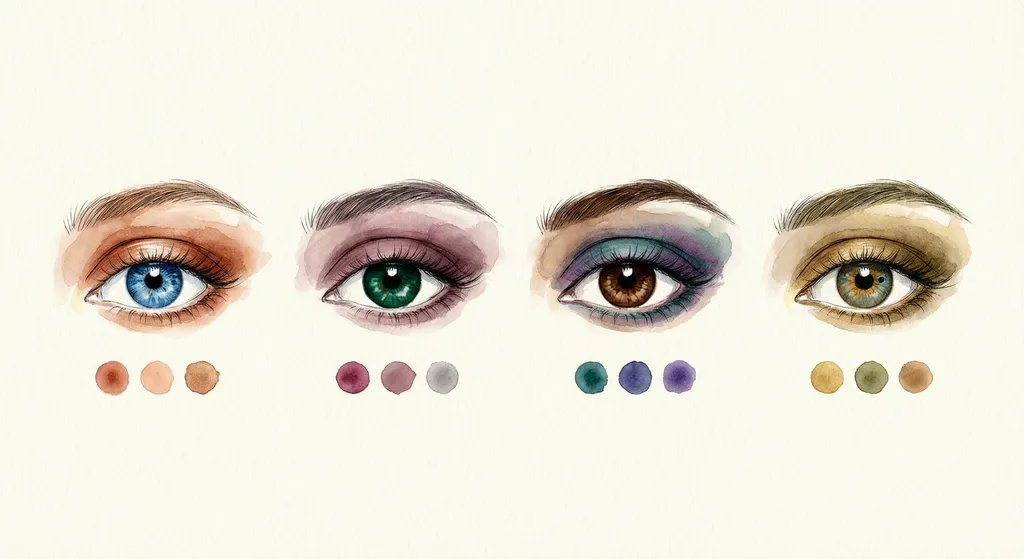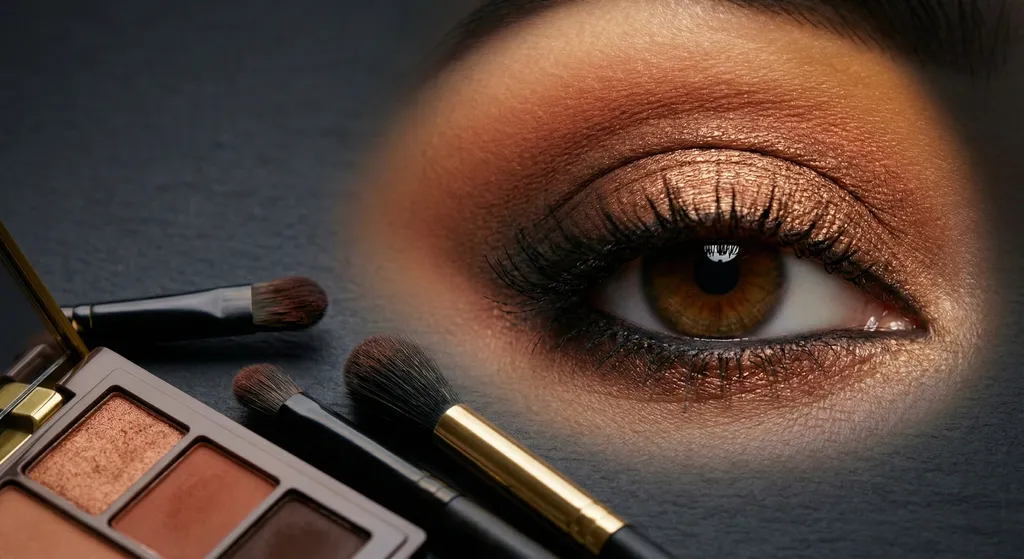
A smoky eye is a blending technique, not a specific color. The defining feature is graduated depth: shadow packed darkest at the lash line and outer corner, fading lighter through the crease, with every edge diffused until no hard boundary remains. The classic charcoal-and-black version is only one expression of the technique. A coppery foil, a dusty mauve gradient, an all-lavender stack, a warm forest green, a burnt sienna grunge: every one of these is still a smoky eye, as long as the depth gradation and the diffused blending are there.
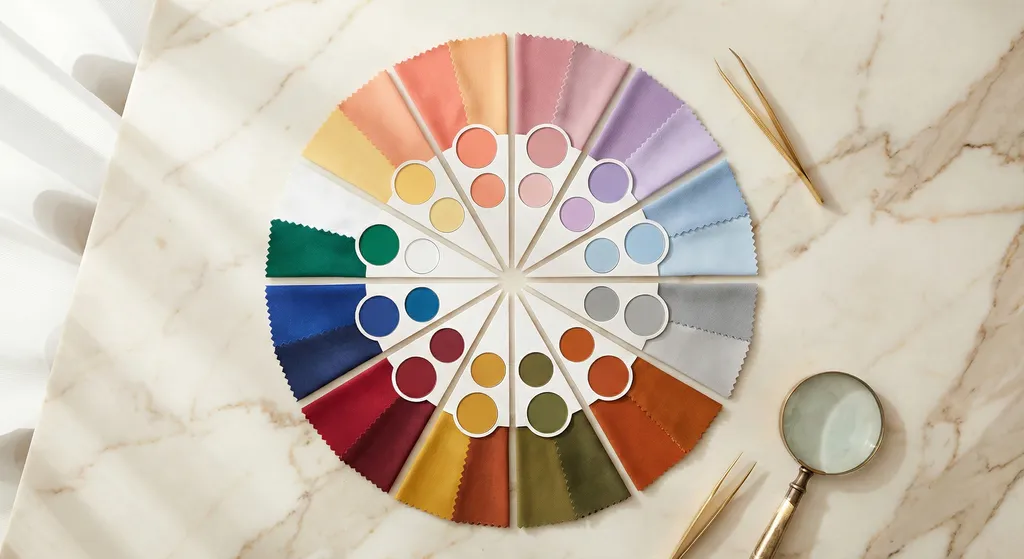
What turns the technique from generic to flattering is the palette. The technique itself stays universal across the 12 color seasons, a transition shade in the crease, a mid shade on the lid, a deepest shade at the outer corner and lash line. What shifts is the entire color story, the finish, and sometimes the spatial concept itself. A Light Summer smoky should not look like a Dark Winter smoky. A Dark Autumn smoky should not look like a Light Spring smoky. Below are 12 distinct interpretations, one per sub-season, each with the exact palette and steps the season calls for.
Find your color season and get a personalized eye makeup tutorialWhat Makes a Smoky Eye Work for Your Season
Three variables decide whether a smoky eye flatters your face or fights it.
Temperature. Warm undertones (Spring, Autumn) want warm shades. Cool undertones (Summer, Winter) want cool shades. Mixing them creates an undertone conflict that reads as muddy or discordant on the face. A warm brown (red, gold, or orange running through it) on cool coloring, or a cool gray (blue or purple running through it) on warm coloring, both feel slightly off and the eye cannot quite tell why.
Depth. Light seasons (Light Spring, Light Summer) need restrained intensity. Going as dark as Dark Winter would overwhelm them. Deep seasons (Dark Autumn, Dark Winter) absorb depth that would crush anyone else. The same pure black smoky that frames True Winter's eye looks like a costume on Light Summer.
Clarity. Bright seasons (Bright Spring, Bright Winter) handle saturation and a graphic edge. Soft and muted seasons (Soft Summer, Soft Autumn) need everything dialed down, with vibrancy traded for diffusion and texture.
Find your color season before picking a look. The technique below carries you the rest of the way.
The Three-Shade Smoky Foundation
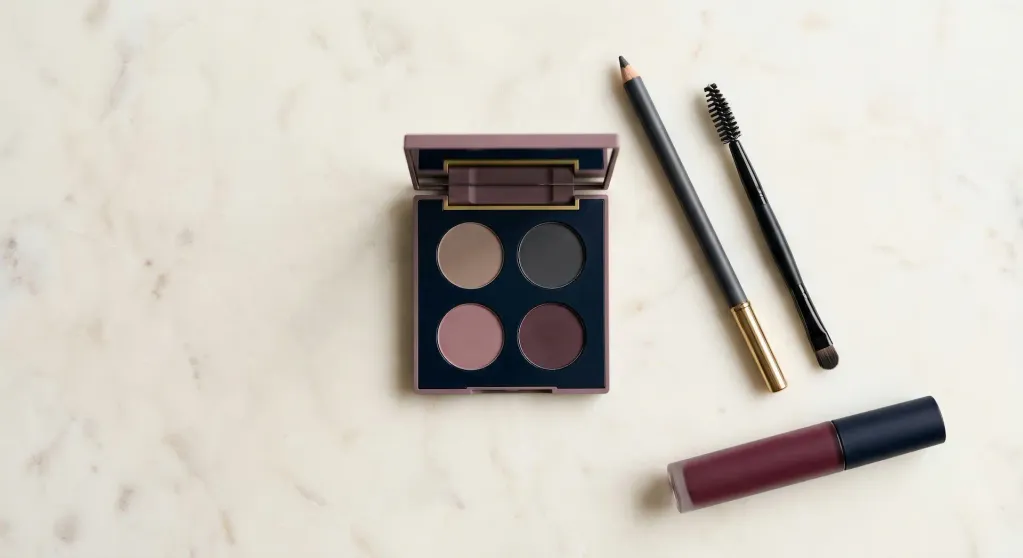
Three brushes cover every look. A flat dense brush packs shadow onto the lid. A fluffy dome blending brush diffuses the transition through the crease. A small pencil brush handles the lash line, outer corner, and inner corner. A few looks below add a kohl pencil for a smudged base or a thin angled brush for a sharp wing edge.
The structure is always three layers.
The transition shade (lightest) goes in the crease and above the lid first, diffused with the fluffy brush in a windshield-wiper motion. It is the blending foundation everything else sits on.
The mid shade (main color) goes on the lid from lash line to just past the crease boundary, packed flat with the dense brush, then blended upward into the transition.
The deepest shade concentrates at the outer corner and along the upper and lower lash lines, blended inward. It does not go all over the lid. It belongs where it builds dimension, the outer V and the lash line.
The 12 sections that follow customize this structure for each sub-season. Shade temperature shifts. Intensity shifts. Finish shifts. Sometimes the spatial concept itself shifts (a wing, a reverse, a monochromatic stack). For more on getting mileage from a multi-pan palette, see get more from your palette.
12 Smoky Eye Looks, One Per Color Season
Light Spring: Minimalist Smoky Eye
Light Spring is warm, light, and low contrast. The palette stays inside warm undertones, light to medium depth, and refuses to creep into dark or cool territory. This is the most restrained smoky eye in the article.
Steps:
- Sweep light warm peach matte #F2D4B8 through the crease and slightly above with the fluffy brush. Soft and wide.
- Pat soft warm champagne-gold satin #D4B896 across the lid with the flat brush. One layer, no heavy build. This shade carries the look.
- Place warm caramel-brown #9E7B5A at the outer corner and along the upper lash line with the pencil brush. Blend inward gently. Definition, not drama.
- Smudge the same caramel-brown along the outer third of the lower lash line. No further than mid-pupil.
- Dab warm ivory shimmer #F5E6D0 at the inner corner.
- Sweep a clean fluffy brush across all edges to soften any remaining boundary. Finish with a warm peachy-nude lip in satin finish.
The caramel-brown at the outer corner and lower lash line builds the smoky structure (darkest at the edges, lighter toward the center), but the depth stays restrained enough to read as a polished wash rather than an evening look. The satin champagne-gold lid gives it just enough dimension to avoid bare. The instinct on Light Spring should always be to go lighter than feels necessary.
Light Spring wears the smoky eye as a quiet warm wash. Champagne-gold lid, warm caramel definition, no black anywhere.
True Spring: Shimmer/Metallic Smoky Eye
True Spring is warm, medium contrast, clear (not muted). This is the season that handles warm metallic finishes better than any other. The palette runs deeper than Light Spring and the shimmer reads more pronounced, but everything stays firmly warm. True Spring's warmth is sunny, clear, and golden, never earthy, spiced, or burnished. That register belongs to Autumn.
Steps:
- Sweep warm peach-nude matte #E8C4A0 through the crease and above with the fluffy brush. Blend wide for the warm base.
- Press bright warm copper metallic #C27840 onto the lid with the flat brush. Patting motion, not sweeping. Build the foil payoff in passes. This shade does the heavy lifting.
- Apply warm toffee-brown matte #7A5230 at the outer corner and along the upper lash line with the pencil brush. Blend inward, keep the warmth continuous.
- Smudge warm toffee-brown along the lower lash line, outer two-thirds.
- Press bright warm gold shimmer #E8C878 into the inner corner. Dab a small amount onto the center of the lid over the copper to amplify the metallic catch.
- Blend edges with a clean fluffy brush, but do not over-blend the lid. The metallic finish should stay reflective, not buffed out to satin. Finish with a warm golden-nude lip in satin finish.
The toffee-brown at the outer V and lash lines creates genuine smoky depth and gradation. The metallic lid sits inside that smoky structure rather than floating on a bare lid. Contrast between the foil center and matte deepest shade is what gives the look dimension. Light Spring's version is soft satin. True Spring's intentionally turns the foil up.
True Spring wears a foiled copper lid framed by warm toffee depth. The metallic finish is the point.
Bright Spring: Colored Smoky Eye
Bright Spring is warm-leaning, high contrast, and vivid. This is the Spring sub-season that carries the most saturation and depth. The colored smoky uses warm teal as the feature shade, the most visually striking option that is still distinctly Bright Spring territory: clear, vivid, warm-leaning, and clearly differentiated from the copper-gold family True Spring already owns.
Steps:
- Sweep warm golden beige matte #D8BC8E through the crease and above with the fluffy brush. Blend wide. The warm base anchors the teal to the skin.
- Pat vivid warm teal satin #1A8C7A across the lid with the flat brush. Build in presses to maintain color intensity. Bright Spring carries saturation, so do not sheer it out.
- Apply deep warm teal-brown #3D5C4A at the outer corner and along the upper lash line with the pencil brush. Blend inward.
- Smudge teal-brown along the lower lash line, outer two-thirds.
- Press bright warm gold shimmer #E2C060 into the inner corner.
- Blend edges with a clean fluffy brush, but preserve the color payoff on the lid. Finish with a warm coral-nude lip in satin finish.
The teal-brown at the outer V and lash line builds the smoky gradation. The warm golden beige transition anchors the entire palette to the skin. The look has the same structural depth as a neutral smoky, but the mid-tone color shifts it into statement territory.
Bright Spring wears a vivid warm teal lid grounded in teal-brown smoky depth. Color is the story.
Light Summer: Minimalist Smoky Eye
Light Summer is cool, light, and low contrast. The mirror of Light Spring on the cool side. Everything stays hushed, muted, and cool. This is the most delicate smoky eye in the cool half of the article.
Steps:
- Sweep cool pale pink matte #E0CCC8 through the crease and above with the fluffy brush. Very soft and diffused.
- Pat soft cool rose satin #C4A0A0 across the lid with the flat brush. One light layer, no heavy build.
- Place soft cool gray #9A9298 at the outer corner and along the upper lash line with the pencil brush. Blend inward gently.
- Smudge the same soft cool gray along the outer third of the lower lash line. No further than mid-pupil.
- Dab cool icy pink shimmer #EAD8D8 at the inner corner.
- Sweep a clean fluffy brush over everything to soften every edge. Light Summer blending should leave almost no visible boundary between shades. Finish with a cool soft pink-nude lip in satin finish.
Same structural restraint as Light Spring's warm version, same "definition, not drama" principle. The difference is entirely in undertone. Light Spring uses peach, champagne-gold, and caramel. Light Summer uses cool pink, cool rose, and cool gray. Both are hushed, both are minimal, but they sit in completely different color families.
The biggest pitfall on Light Summer is going harder than the season can absorb. The instinct should be to go lighter than feels necessary. Subtlety is the point.
Light Summer wears the smoky eye as a quiet cool wash. Cool rose lid, soft gray definition, no black anywhere.
True Summer: Soft Smoky Eye
True Summer is cool, muted, and medium contrast. The most balanced of the Summers. More depth than Light Summer, more coolness than Soft Summer. This sub-season handles a wearable everyday smoky better than any other.
Steps:
- Sweep cool greige matte #B8AEA8 through the crease and above with the fluffy brush. Wide and soft, windshield-wiper motion.
- Pat cool dusty mauve #9E7E88 across the lid with the flat brush. Build to medium opacity. True Summer takes more pigment than Light Summer, but the finish should stay soft, not packed.
- Apply steel gray #6A6872 at the outer corner and along the upper lash line with the pencil brush. Blend inward with thorough diffusion.
- Smudge steel gray along the lower lash line, outer two-thirds.
- Dab cool silvery-pink shimmer #DCC8CC at the inner corner.
- Blend all edges with a clean fluffy brush. True Summer blending should be very diffused. No crisp lines anywhere. Finish with a cool dusty rose lip in satin finish.
The steel gray at the outer V and lash lines provides genuine smoky depth and gradation. The dusty mauve gives the look a color identity beyond a basic neutral. Every element stays soft-edged and muted, which is what separates a soft smoky from a full-intensity smoky.
True Summer wears a diffused mauve and steel gray smoky. Cool, muted, fully blended at every edge.
Soft Summer: Monochromatic Smoky Eye
Soft Summer is cool-neutral, very muted, and runs at low to medium contrast. The most muted season in the Summer family. Everything reads grayed, softened, hushed. A monochromatic approach works here because Soft Summer's coloring looks most harmonious when the entire eye stays inside one color family at varying depths rather than introducing multiple distinct hues.
Steps:
- Sweep pale muted lavender matte #C8B8C0 through the crease and above with the fluffy brush. Wide and thoroughly diffused.
- Pat muted dusty lavender-mauve matte #9E8898 across the lid with the flat brush. Keep it matte. Soft Summer generally looks best without metallic or foil finishes.
- Apply muted cool plum-gray #6E5E6E at the outer corner and along the upper lash line with the pencil brush. Blend inward.
- Smudge plum-gray along the lower lash line, outer two-thirds.
- Dab pale cool lavender shimmer #D8C8D0 at the inner corner. Keep it subtle.
- Blend all edges thoroughly with a clean fluffy brush. Like every Summer, edges should be very diffused. Finish with a muted cool mauve lip in satin finish.
Every shade lives in the same hue family at three depths. There is no contrast between different color families: no warm transition under a cool lid, no gray deepest against a mauve mid. Tonal unity is the point. The whole eye reads as one seamless gradation rather than three distinct colors, which flatters Soft Summer's low-contrast, muted coloring.
True Summer introduces two distinct color families (greige transition, mauve mid, steel gray deepest). Soft Summer keeps everything in one. True Summer carries slightly more color variation. Soft Summer is more restrained and tonally unified.
Soft Summer wears an all-lavender monochromatic smoky. One hue family at three depths, fully matte.
Discover Your Perfect Eye Look
Get your first AI-personalized look in under 5 minutes.


Soft Autumn: Matte Smoky Eye
Soft Autumn is warm-neutral, muted, and runs at low to medium contrast. The most muted season in the Autumn family. It shares the grayed, hushed quality with Soft Summer, but the undertone shifts to warm-neutral. An all-matte finish suits Soft Autumn because shimmer and metallic look too bright and jarring against naturally muted coloring. Velvety matte texture mirrors the season's character.
Steps:
- Sweep muted warm taupe matte #B8A898 through the crease and above with the fluffy brush. Wide and soft.
- Pat muted warm mushroom-brown matte #8E7E70 across the lid with the flat brush. Build to medium opacity. Keep it matte. No satin.
- Apply muted warm dark brown matte #5E4E42 at the outer corner and along the upper lash line with the pencil brush. Blend inward gently.
- Smudge muted warm dark brown along the lower lash line, outer two-thirds.
- Place light matte warm beige #D0C0AE at the inner corner with a fingertip or small brush. No shimmer. The all-matte finish is the look.
- Blend all edges with a clean fluffy brush. Soft Autumn blending should be thorough but not as diffused as Summer. Edges stay soft, but the warmth holds its shape. Finish with a muted warm nude-brown lip in matte finish.
The smoky structure is still present (deepest at outer corner and lash lines, lighter toward inner corner, graduated transition). The all-matte commitment gives it an editorial, velvety quality that a satin or shimmer version could not deliver. Texture consistency is part of the look.
Soft Autumn wears an all-matte muted brown smoky. Velvety, warm, restrained.
True Autumn: Colored Smoky Eye
True Autumn is warm, medium contrast, rich and earthy. The purest expression of Autumn warmth. This sub-season owns burnished, earthy, spiced tones. The colored smoky uses warm forest green as the feature shade. Distinctly Autumnal (earthy, warm-leaning green, not the cool jewel emerald that Winter owns), visually striking, and clearly differentiated from Bright Spring's teal.
Steps:
- Sweep warm olive-beige matte #B0A078 through the crease and above with the fluffy brush. Blend wide. This shade does critical work bridging skin tone into the green.
- Pat warm forest green satin #4A6E3E across the lid with the flat brush. Build in presses to get rich color payoff. True Autumn carries depth and saturation, so do not sheer it out.
- Apply deep warm espresso #3E2E20 at the outer corner and along the upper lash line with the pencil brush. Blend inward. The brown grounds the green and creates the smoky depth.
- Smudge espresso along the lower lash line, outer two-thirds. Optionally, smudge a thin line of forest green directly under the lower lashes before the espresso to carry the color story downward.
- Press warm antique gold shimmer #C8A850 into the inner corner.
- Blend edges with a clean fluffy brush, but preserve the green payoff on the lid. Finish with a warm terracotta-nude lip in satin finish.
Both Bright Spring and True Autumn wear a colored smoky, but the character is completely different. Bright Spring's teal is vivid, clear, and bright. True Autumn's forest green is rich, earthy, and warm. Bright Spring darkens the feature color itself (teal-brown at the outer V). True Autumn uses a separate warm espresso to ground the green, which gives a more complex, layered palette. Bright Spring is punchy. True Autumn is sumptuous.
True Autumn wears a warm forest green lid grounded in espresso depth. Earthy color, polished blend.
Dark Autumn: Grunge/Editorial Smoky Eye
Dark Autumn is warm, high contrast, and deep. The darkest and richest Autumn sub-season. This is the season that handles intentional imperfection, smudged edges, and real depth without it overwhelming the face. The grunge smoky leans into that. Where other seasons need careful blending and restraint, Dark Autumn can go heavy-handed and read as editorial rather than messy.
Steps:
- Line the upper waterline with warm black-brown kohl #2E2018. Smudge along the entire upper lash line with a fingertip or smudger. Do not clean it up. The messiness is intentional.
- Sweep warm rust-olive matte #8E6E48 through the crease and above with the fluffy brush. Blend wider and less precisely than you would for other looks. Let it creep slightly past where you would normally stop.
- Pat burnt sienna matte #9E5030 across the lid with the flat brush. Press firmly for dense, matte coverage.
- Apply deep warm near-black brown #1E1610 at the outer corner and along the upper lash line, over the smudged kohl. Blend inward, but do not aim for a perfectly graduated edge. Some unevenness is correct.
- Smudge near-black brown along the entire lower lash line with the pencil brush. Take it slightly lower than you normally would. The "too much" feeling is the point.
- Press and smudge the lower lash line shadow further with a fingertip. Do not clean up with a fluffy brush. Edges should look lived-in, not perfected.
- Skip the inner corner. No shimmer, no highlight. Leaving the inner corner raw is part of the grunge aesthetic. Finish with a warm deep brown-nude lip in matte finish.
Grunge is deliberate imperfection, not incompetence. The kohl base, the raw inner corner, the wider blending zone, the fingertip smudging instead of brush blending, every element is a specific choice. The depth of Dark Autumn's coloring absorbs that intensity and makes it look intentional. The same approach on a Light Summer would land as a mistake. On Dark Autumn it reads as fashion editorial.
True Autumn's colored smoky is rich but polished, with clear color placement and intentional blending. Dark Autumn's grunge version throws that precision away on purpose. True Autumn is sumptuous. Dark Autumn is raw.
Dark Autumn wears a kohl-rooted, fingertip-smudged grunge smoky in burnt sienna and warm near-black. Editorial mess by design.
Bright Winter: Winged Smoky Eye
Bright Winter is cool, high contrast, and vivid. The clearest and most graphic of the Winters. This sub-season suits precision, sharp lines, and bold color impact. A winged smoky merges shadow and liner into one elongated, architectural shape, which matches Bright Winter's crisp, clean-edged coloring perfectly. Where Dark Autumn's look celebrates deliberate mess, Bright Winter's celebrates deliberate control.
Steps:
- Sweep cool icy lavender-gray matte #C0B8C8 through the crease and above with the fluffy brush. Blend, but keep the edges cleaner and more defined than you would for Summer. Bright Winter suits visible structure.
- Pat cool vivid plum satin #6E2858 across the lid with the flat brush. Build to full opacity. Bright Winter carries bold pigment.
- Apply pure cool black #0A0A0E at the outer corner with the pencil brush. The key move: instead of blending inward in a rounded shape, blend the black outward and upward toward the tail of the brow, extending past the outer corner to create the wing shape.
- Use a thin angled brush or gel liner to sharpen the bottom edge of the wing into a clean line. The top edge stays smoked and diffused. The bottom edge stays crisp. This contrast is what defines the winged smoky as distinct from both a standard wing and a standard smoky.
- Apply pure black along the entire upper lash line, connecting into the wing.
- Smudge cool vivid plum (not black) along the lower lash line, outer two-thirds. Using the mid shade rather than the deepest shade on the lower lash line keeps the drama focused upward on the wing.
- Press icy cool silver shimmer #D8D8E0 into the inner corner. Finish with a cool berry-nude lip in satin finish.
The wing is built from shadow, not drawn on top of it. The black outer corner extends into the wing shape as part of the blending process. The lower edge sharpens with liner afterward. Shadow and liner become one structure. A standard smoky eye blends in all directions. A winged smoky directs the blend specifically outward and upward into a deliberate shape.
Bright Winter wears a winged smoky in plum and pure black. Architecture is the point.
True Winter: Classic Black Smoky Eye
True Winter is cool, the highest contrast of any season, and pure. No muddiness, no warmth, no compromise. This is the season pure black was built for. The classic black smoky eye is the most iconic smoky look in existence, and True Winter is the only season that wears it as easily as bare skin.
Steps:
- Line the upper waterline with black gel liner. This builds intensity from the base before any shadow goes on. Black kohl on the waterline is non-negotiable for the classic look at full intensity.
- Sweep icy silver-gray matte #B8B8C0 through the crease and above with the fluffy brush. Blend, but keep the edges crisper than Summer or Spring. True Winter suits defined boundaries. Do not diffuse the transition into oblivion.
- Pack cool dark charcoal matte #3E3E48 across the lid with the flat brush. Press firmly for full, dense coverage. This is not a wash. It should be opaque.
- Apply pure black matte #080808 at the outer corner and along the entire upper lash line with the pencil brush. Blend inward across the outer third of the lid. The black should graduate into the charcoal, not replace it entirely.
- Apply pure black along the entire lower lash line. Not just the outer two-thirds. The full lash line. This is the classic smoky.
- Press icy pure silver shimmer #D0D0DA into the inner corner. The cold brightness against the matte black creates the contrast True Winter's coloring demands.
- Blend edges with a clean fluffy brush, but conservatively. True Winter's blending goal is smooth graduation, not diffusion. Edges should be seamless but still clearly structured. Finish with a cool blue-red lip in satin finish.
Full black on both lash lines, black waterline, charcoal lid, silver transition. No color, no warmth, no compromise. This is the version every smoky eye tutorial on the internet is trying to describe, but most faces cannot actually wear. True Winter can.
True Winter handles metallic finishes, but the classic black smoky is defined by its matte intensity. The only shimmer is the silver inner corner, which serves as a cold light source against the matte black. Adding shimmer to the lid would push the look into shimmer-smoky territory (which True Spring already owns in warm tones). The purity of the matte black is the point.
True Winter wears the classic black smoky. Full black, symmetrical, fully matte except for silver at the inner corner.
Dark Winter: Reverse Smoky Eye
Dark Winter is cool-neutral, high contrast, and deep. Dark Winter shares depth with Dark Autumn, but the undertone runs cool rather than warm. The reverse smoky relocates the emphasis to the lower lash line rather than the upper lid, which gives Dark Winter something modern and unexpected while still working with their depth and contrast.
Steps:
- Start with the upper lid. Sweep cool pewter-gray #8E8E98 across the entire upper lid with the flat brush as a light wash. Just enough to unify the lid tone. No crease work, no outer V depth. The upper lid is the quiet half of this look.
- Line the lower waterline with black pencil.
- Apply cool pewter-gray along the entire lower lash line as a blending base with the pencil brush. Extend it slightly below and outward, wider than you would for a standard smoky. This creates the canvas for the lower emphasis.
- Over the pewter base, apply deep cool plum satin #502848 along the lower lash line from outer corner to inner third. Press it into the lash roots with the pencil brush for concentrated color.
- Apply cool near-black #1A1828 at the outer corner of the lower lash line only. Blend it into the plum, graduating from darkest at the outer corner to plum at the center to pewter at the inner third.
- Soften the lower edge of the shadow downward slightly with a fingertip or small smudger. The reverse smoky should have a visible depth zone beneath the eye, not a tight thin line.
- Dab cool icy shimmer #C8C8D4 at the inner corner of the lower lash line only. This catches light and prevents the look from closing the eye in.
- Apply mascara heavily on top lashes, lightly on bottom. Top lashes frame the eye from above while the lower shadow does the heavy lifting. Finish with a cool deep plum lip in satin finish.
Graduated depth (darkest at outer corner, medium at center, lightest at inner) is the same structure as a traditional smoky eye, but relocated. The deliberate restraint on the upper lid is what signals that the inversion is a choice. Heavy on both upper and lower lids would just be an all-over smoky. The contrast between a quiet upper lid and an intense lower lash line is what makes this a reverse smoky.
Dark Winter wears a reverse smoky with the depth zone beneath the eye, jewel plum at the center, cool near-black at the outer corner, and a quiet upper lid.
Eye Shape Adaptations for the Smoky Eye
Twelve palettes, one shape rule per eye type. Placement shifts. The palette your season carries does not.
Hooded eyes: Place the deepest shade higher than the natural socket, on the brow bone where the crease would sit on a non-hooded eye, and check the result with eyes open, not closed. Density on the lid disappears under the fold, so keep the mid shade at medium opacity rather than fully packed. The lower lash line carries more visible weight on hooded eyes, so feel free to extend the smudged deepest shade slightly further along the lower lash line than the standard outer two-thirds. See the eye shapes guide for placement diagrams.
Monolid eyes: There is no natural fold. Build the smoky vertically: place the transition shade where the fold would sit if one were present (typically 6 to 10mm above the lash line depending on eye size), the mid shade across the visible lid, and the deepest shade concentrated at the lash line and outer corner. The full lid stays visible on monolids, so satin and metallic lid finishes (True Spring's foiled copper, Bright Winter's vivid plum) read especially clearly.
Deep-set eyes: The socket is already shadowed by the brow bone, so keep the deepest shade at the lash line and the transition concentrated slightly lower than the natural socket depth. Pulling the inner corner shimmer or lighter shade forward onto the front of the lid brings the eye out rather than letting it recede further. Keep the outer-corner blending extending outward rather than upward so the look lifts rather than closes.
Round eyes: Extend the deepest shade outward rather than angling it sharply upward. Keep the outer-corner blending elongated past the outer corner to add width and balance the round shape. Bright Winter's winged smoky is especially flattering here because the wing's horizontal direction visually elongates the eye.
Almond eyes: Every smoky look in the 12 above applies without modification. Almond balance supports each placement variant.
Upturned eyes: Lean into the natural lift. Extend the deepest shade and any wing shape along the upward line. Keep the lower lash kohl slightly heavier at the outer third to balance the lift. Dark Winter's reverse smoky works well here because the lower-lash emphasis grounds the lifted shape.
Downturned eyes: Extend the deepest shade and any wing shape upward at the outer corner instead of following the natural downward slope. Lift the corner with placement. The smudged lower lash line should stop before the outer corner to avoid pulling the eye further down.
Close-set eyes: Concentrate the deepest shade at the outer corner and keep the inner corner highlight bright and wide to open the space between the eyes. Avoid heavy color or kohl on the inner third of either lash line.
Wide-set eyes: Pull the deepest shade slightly inward along the upper lash line and extend the smudged kohl along the inner third of the lower lash line to visually close the gap. Skip or minimize the inner corner highlight.
Placement adapts to your eye shape. The palette does not adapt: it comes from your color season.
Common Smoky Eye Mistakes by Season
Pulling Light Summer or Light Spring's smoky too dark. Light seasons cannot absorb a Dark Winter level of pigment. The deepest shade on Light Summer is a soft cool gray, never charcoal or black. The deepest shade on Light Spring is a warm caramel-brown, never espresso. Going darker is not "more dramatic," it is undertone-mismatched and reads as costume.
Using black on a Spring or Autumn. Pure black is True Winter, Bright Winter, Dark Winter, and (only at near-black warmth) Dark Autumn territory. On any other warm season the cool undertone of black fights the warm undertone of the face. Replace with the season's warm equivalent: caramel-brown for Light Spring, toffee-brown for True Spring, teal-brown for Bright Spring, mushroom-brown for Soft Autumn, espresso for True Autumn, near-black brown for Dark Autumn.
Skipping the transition shade. Applying the lid color directly to a bare lid with no blending base creates a hard line at the crease boundary that no amount of subsequent blending fully erases. Apply and blend the transition first. Every other shade sits inside that base.
Over-blending until the color disappears. Continuous brushing without re-depositing pigment moves color around without building it. Press shadow with a patting motion first, then blend. If color is too sheer, press more shadow on, then blend again. Do not just keep brushing.
The single most consequential mistake is matching the wrong palette to your season. Every other mistake can be fixed in the next pass. An undertone mismatch cannot be salvaged by technique.
Frequently Asked Questions
Find your sub-season, build the look assigned to it, and the smoky eye will work for your face the way it never quite does when you copy a generic tutorial.
Discover Your Perfect Eye Look
Get your first AI-personalized look in under 5 minutes.