The best eyeshadow for your eye color depends on whether you have the warm or cool version of that color. Every eye color exists in both: blue eyes can be warm (golden flecks, Spring and Autumn seasons) or cool (icy steel-blue, Summer and Winter seasons), and the same applies to green, brown, and hazel. Your color season determines which version you have, and that changes everything about which shades actually work.
Most eyeshadow guides skip this distinction entirely. They recommend copper and bronze for all blue eyes, plum and burgundy for all green eyes, jewel tones for all brown eyes. This advice comes from complementary color theory, and it is not wrong for the warm version. But a warm copper that looks gorgeous on warm blue eyes can look harsh and disconnected on cool blue eyes. Without knowing your season temperature, you are following guidance built for only half the population.
This article takes a season-first approach. For each eye color, you will find two palettes: one for warm seasons (Spring and Autumn) and one for cool seasons (Summer and Winter). The complementary color wheel still plays a role, but only when its suggestions agree with your season temperature. When they clash, season wins.
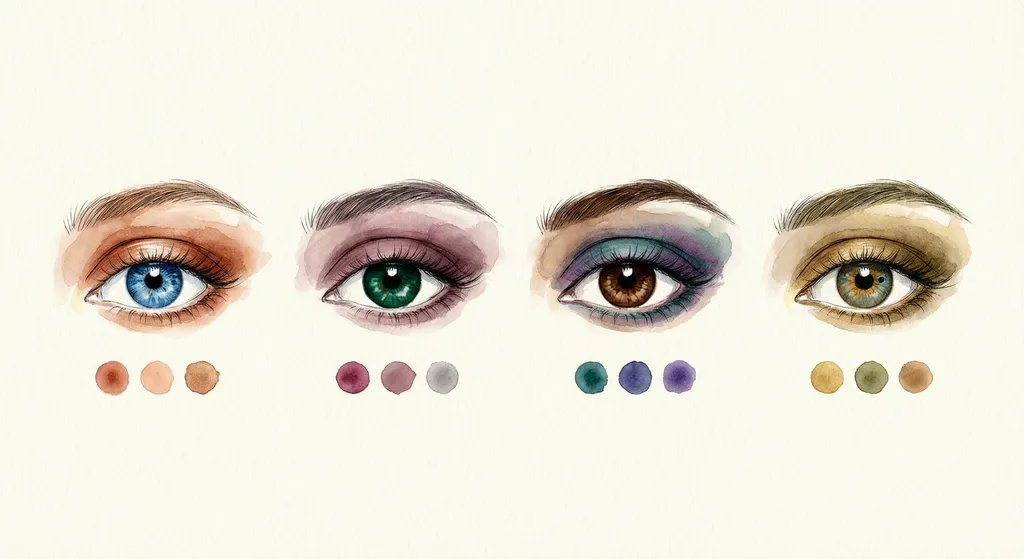
| Eye Color | Warm Season Top Picks | Cool Season Top Picks |
|---|---|---|
| Blue | Copper, bronze, terracotta | Cool taupe, dusty rose, slate |
| Green | Warm burgundy, rose gold, reddish plum | Cool mauve, blue-violet, cool berry |
| Brown | Warm bronze, forest green, burnished gold | Deep purple, navy, crisp teal |
| Hazel | Gold, copper, deep olive | Cool plum, dusty mauve, teal |
Color Season: Your Dominant Guide
Your color season is the combination of undertone, depth, and clarity that defines your overall palette. It determines whether your eyes, skin, and hair are fundamentally warm or cool. This is not a subtle refinement of other advice. It is the primary filter through which all eyeshadow guidance should pass.
Here is the core principle: season identifies the temperature of your eyes. Warm blue eyes (found in Spring and Autumn seasons) are a completely different canvas than cool blue eyes (found in Summer and Winter seasons). The same is true for green, brown, and hazel. Two people can share the same eye color label and need entirely different palettes because their seasons put them on opposite sides of the warm-cool divide.
This is how to use season and the color wheel together:
- Season identifies your eye temperature. Spring and Autumn eyes are the warm version of their color. Summer and Winter eyes are the cool version.
- The color wheel provides optional contrast ideas, but only when they match your season temperature. Warm complementary shades work for warm-season eyes. Cool complementary shades work for cool-season eyes.
- When they clash, follow your season and ignore the wheel. A True Winter with blue eyes should not use warm copper just because the wheel says orange complements blue. That warm copper will fight the cool undertone of every other feature on your face.
Three examples to illustrate. A True Winter with blue eyes needs cool-toned contrast, not the warm copper-and-bronze that generic guides recommend. Cool taupe, dusty rose, muted plum, and pewter create contrast against the iris while harmonizing with Winter's cool clarity. Warm terracotta would make the eyes pop in isolation but clash with the skin. A True Autumn with green eyes should reach for warm burgundy, reddish plum, and earthy rose gold. A cool violet, while technically the complement of green, would look disconnected against warm skin. A Bright Spring with brown eyes benefits from warm bronze, vivid turquoise, and burnished gold. Cool navy, despite being a standard brown-eye recommendation, would look muted and off against Spring's warm clarity.
What about neutral undertones? If your season is neutral-warm (such as Soft Autumn), follow the warm palette. If your season is neutral-cool (such as Soft Summer), follow the cool palette. Borrowing a shade from the opposite temperature is possible, but warm shades on a cool complexion (or cool shades on a warm one) can be overpowering. Treat cross-temperature borrowing as an occasional accent, not a foundation for your everyday look.
If you do not know your color season yet, start with the palettes below and test both warm and cool versions. If the warm palette looks vibrant and cohesive on you, you likely have the warm version of your eye color. If it looks harsh or disconnected while the cool palette feels natural, your eyes are probably the cool version. Your skin's reaction is the deciding vote. But recognize that without knowing your season, you are essentially guessing which temperature to follow, and the traditional color wheel will not help you resolve that question.
Your color season is the single most important factor in choosing eyeshadow. Identify your season temperature first, then select shades that match it.
Complementary Contrast: A Secondary Tool
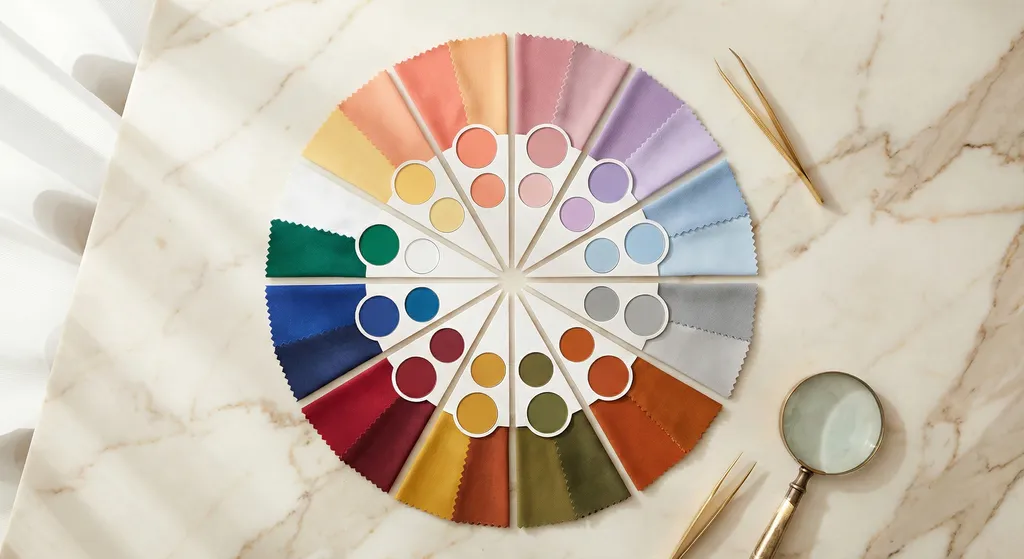
The color wheel arranges hues in a circle. Colors that sit directly opposite each other (complementary colors) create mutual intensity when placed side by side. This is why certain eyeshadow shades make your iris look brighter: the contrast mechanism is real.
The problem is that traditional complementary theory assumes the warm version of each eye color:
- Blue eyes (warm version) are complemented by warm orange and its neighbors: copper, bronze, warm brown, peach, terracotta
- Green eyes (warm version) are complemented by warm red-violet: burgundy, warm plum, reddish brown, warm mauve, rose gold
- Brown eyes (warm version) are complemented by blue and teal, though purple, green, and bronze all produce strong contrast too
- Hazel eyes (warm version) shift depending on which tone you want to emphasize: purple for the green, gold for the amber
These suggestions work well for Spring and Autumn seasons. For Summer and Winter seasons, they need to be translated into cool equivalents or replaced entirely with cool-temperature alternatives.
The critical override: when season temperature and the wheel disagree, season wins. A cool-season person should not force warm complements onto their face just because a chart says so. Cool contrast (cool taupe, dusty mauve, slate, pewter) can intensify a cool iris just as effectively as warm contrast intensifies a warm iris. The mechanism is the same; the temperature must match.
Analogous colors as a fallback: when the wheel's complementary suggestion clashes with your season, analogous colors (hues that sit next to each other on the wheel) offer a reliable alternative. Cool-season people can use analogous cool tones for harmony rather than forcing warm contrast. A cool-season green-eyed person wearing soft cool lavender or dusty blue-violet gets a cohesive, flattering look instead of fighting their undertone with warm burgundy.
Use the color wheel for contrast ideas, but always filter those ideas through your season temperature. When they clash, follow your season and skip the wheel.
Complementary vs. Matching
Wearing eyeshadow that matches your iris color reduces contrast and can make your eyes look smaller. But the correct contrast must also respect season temperature. A warm complement on cool skin creates a different kind of problem: the iris may pop, but the face looks discordant. Both the hue and the temperature need to work together.
Best Eyeshadow for Blue Eyes
Blue eyes exist in two distinct versions. Warm blue eyes (Spring and Autumn seasons) carry golden flecks, amber warmth, or a teal-leaning quality. Cool blue eyes (Summer and Winter seasons) lean icy, steel-blue, or gray-blue. This distinction matters more than any color wheel chart because the temperature of your blue determines which shadows will harmonize with your entire face, not just your iris.
Warm blue eyes respond beautifully to the classic warm-complement family: copper, bronze, warm brown, terracotta, and burnt orange. These shades create genuine complementary contrast that looks intentional against warm skin.
Cool blue eyes need a different approach. Warm copper and terracotta will pop the iris in isolation but fight the cool undertone of the surrounding skin, hair, and brows. Cool-toned contrast works better: dusty rose, cool taupe, muted mauve, slate, and pewter create contrast against cool blue irises while keeping the entire face harmonious.
Blue Eyes: Warm Seasons (Spring / Autumn) Palette
Best Colors
Accent Colors
Colors to Avoid
Blue Eyes: Cool Seasons (Summer / Winter) Palette
Best Colors
Accent Colors
Colors to Avoid
Shades to avoid: Blue and silver eyeshadows sit in the same color family as your iris, which means they compete instead of contrasting. The result is often eyes that look smaller or paler. If you love a cool-toned look, choose a deep navy over a light blue so that depth creates contrast even without a complementary hue. Additionally, warm orange-family shades on cool blue eyes create a temperature mismatch: the iris may brighten, but the overall effect can look jarring against cool skin.
Season notes for blue eyes:
- Warm Seasons (Spring / Autumn): True Autumn and Dark Autumn can push terracotta, burnt copper, and warm bronze to their richest. True Spring and Bright Spring should lean into vivid copper, warm coral, and clear peach. Bright Spring can add extra saturation.
- Cool Seasons (Summer / Winter): True Summer, Soft Summer, and Light Summer do best with dusty rose-bronze, muted mauve, and cool taupe. Keep everything muted. True Winter, Bright Winter, and Dark Winter can handle deeper intensity: charcoal-toned plum, deep cool mauve, and blackened pewter with cool metallic clarity.
For warm blue eyes, reach for copper, bronze, and terracotta. For cool blue eyes, choose cool taupe, dusty rose, and muted mauve instead.
Quick look: Warm Copper Smoke (Spring / Autumn): Apply Champagne across the entire lid as a base. Blend Warm Brown into the crease and slightly above it. Press Copper onto the center of the lid and pat down for maximum shimmer. Deepen the outer corner with Terracotta, blending it into the crease shade. Smudge a thin line of Bronze along the lower lash line, concentrating on the outer third. Finish with a Peach highlight on the inner corner and brow bone.
Quick look: Cool Mauve Smoke (Summer / Winter): Apply Cool Champagne as a base across the lid. Blend Cool Taupe into the crease with windshield-wiper motions. Press Dusty Rose-Bronze onto the center of the lid, patting for shimmer payoff. Deepen the outer corner with Cool Plum, blending where it meets the taupe. Smudge Pewter along the outer third of the lower lash line. Finish with Soft Pink on the inner corner and brow bone. This look creates genuine contrast against cool blue irises without a single warm shade fighting the skin.
Best Eyeshadow for Green Eyes
Green eyes are relatively rare, making up only about 2% of the global population, and they respond beautifully to the purple and red-violet family. But as with blue eyes, the warm-cool split changes which purple tones actually work.
Warm green eyes (Spring and Autumn) carry golden or amber warmth and look best with warm, wine-adjacent purples: deep burgundy, reddish plum, warm mauve, and earthy reddish-brown. These create complementary contrast while keeping the warmth consistent across the face.
Cool green eyes (Summer and Winter) lean towards gray-green or blue-green and need cool versions of the purple family: cool mauve, dusty pink-plum, blue-violet, and cool berry. Warm burgundy on cool green eyes creates the same temperature clash as warm copper on cool blue eyes.
Green Eyes: Warm Seasons (Spring / Autumn) Palette
Best Colors
Accent Colors
Colors to Avoid
Green Eyes: Cool Seasons (Summer / Winter) Palette
Best Colors
Accent Colors
Colors to Avoid
Shades to avoid: Green eyeshadow cancels out your iris by reducing contrast, making your eyes look less vibrant. Cool silver can skew green eyes toward gray, dulling the warmth that makes them distinctive. If you want a green-family shade, opt for a deep olive or forest green that is dark enough to create contrast instead of competing directly. Warm burgundy on cool-season green eyes creates a noticeable temperature mismatch: the purple undertone helps, but the warmth fights the skin.
Season notes for green eyes:
- Warm Seasons (Spring / Autumn): True Autumn, Dark Autumn, and Soft Autumn should reach for warm burgundy, reddish plum, deep wine, and earthy warm mauve. True Spring and Bright Spring can use clear plum, vivid mauve, and warm rose gold. Bright Spring can push toward vivid fuchsia for maximum effect.
- Cool Seasons (Summer / Winter): True Summer, Soft Summer, and Light Summer do best with cool mauve, dusty pink-plum, and soft lavender. Keep it muted. Bright Winter, True Winter, and Dark Winter can handle deep violet, sharp cool berry, and vivid plum at higher intensity.
For warm green eyes, use warm burgundy, rose gold, and reddish plum. For cool green eyes, choose cool mauve, blue-violet, and cool berry.
Quick look: Warm Plum and Rose Glow (Spring / Autumn): Sweep Champagne Pink across the lid and up to the brow bone. Apply Warm Mauve into the crease and blend in windshield-wiper motions. Press Rose Gold onto the center of the lid and pat firmly for shimmer. Deepen the outer corner with Reddish Plum, blending where it meets the mauve. Line the lower lash line with Reddish Brown, smudged softly on the outer two-thirds. Add Dusty Rose to the inner corner.
Quick look: Cool Lavender Berry (Summer / Winter): Apply Icy Lavender as a base across the lid. Blend Cool Rose into the crease. Press Cool Mauve onto the center of the lid. Deepen the outer corner with Blue-Violet, blending it into the crease shade. Smudge Cool Berry along the outer half of the lower lash line. Finish with Cool Pink Shimmer on the inner corner and brow bone. This look pulls green irises forward with purple contrast while keeping every shade in cool territory.
Best Eyeshadow for Brown Eyes
Brown is the most common eye color worldwide, and it is also the most versatile when it comes to eyeshadow. Because brown contains orange, red, and yellow pigments spread across a wide section of the color wheel, it is complemented by a broad range of shades. But "versatile" does not mean "anything goes." The warm-cool split is just as important here.
Warm brown eyes (Spring and Autumn) carry amber, golden, or honey-toned warmth. They look best with warm bronze, burnished gold, forest green, terracotta, and rich burgundy. These create glowing, dimensional contrast that highlights the lighter flecks often found in warm brown irises.
Cool brown eyes (Summer and Winter) tend toward deeper espresso tones or have a cool ashiness to them. They are enhanced by deep purple, navy, crisp teal, cool plum, and steel. Cool brown eyes respond beautifully to jewel-toned contrast delivered in cool temperatures.
Brown Eyes: Warm Seasons (Spring / Autumn) Palette
Best Colors
Accent Colors
Colors to Avoid
Brown Eyes: Cool Seasons (Summer / Winter) Palette
Best Colors
Accent Colors
Colors to Avoid
Shades to avoid: Matte brown shadows that closely match your iris tone will blend into your eye color instead of highlighting it. The result is a flat, undefined look. If you love brown tones, reach for a shade that is either significantly lighter or warmer (for warm seasons) or cooler (for cool seasons) than your iris, so there is enough contrast to create definition. For warm seasons, cool navy as a dominant shade can look disconnected. For cool seasons, warm bronze as the primary lid color can clash with cool skin and hair.
Season notes for brown eyes:
- Warm Seasons (Spring / Autumn): True Autumn and Dark Autumn should lean into forest green, burnished gold, deep terracotta, and rich burgundy at full depth. True Spring and Bright Spring can use vivid turquoise, clear coral-bronze, and warm teal. Bright Spring can layer Burnished Gold heavily for a radiant effect. Soft Autumn benefits from earthier versions: hazy olive, muted warm taupe, and dusty bronze.
- Cool Seasons (Summer / Winter): True Winter and Dark Winter should use crisp teal, deep navy, cool-toned plum, and deep purple at full intensity. Bright Winter can push vivid jewel tones with metallic clarity. True Summer and Light Summer do best with soft navy, dusty teal, and cool rose-mauve at moderate saturation. Soft Summer benefits from muted versions: dusty olive, hazy cool taupe, and earthy plum.
For warm brown eyes, lean into warm bronze, burnished gold, and forest green. For cool brown eyes, reach for deep purple, navy, and crisp teal.
Quick look: Warm Bronze and Green Smoke (Spring / Autumn): Apply Warm Champagne from lash line to brow bone. Blend Terracotta into the crease and build the intensity gradually. Press Warm Bronze onto the center of the lid, tapping instead of swiping. Darken the outer corner with Forest Green, blending it into the crease shade. Smudge Warm Olive along the outer half of the lower lash line and add Burnished Gold to the inner corner.
Quick look: Cool Jewel-Toned Smoke (Summer / Winter): Apply Icy Champagne from lash line to brow bone. Blend Cool Plum into the crease. Press Crisp Teal onto the center of the lid, packing the pigment densely. Darken the outer corner with Navy, blending it into the plum crease shade. Smudge Deep Purple along the outer half of the lower lash line and add Cool Silver to the inner corner. This look creates vivid jewel-toned contrast against cool brown eyes without any warm shades pulling the face off balance.
Discover Your Perfect Eye Look
Get your first AI-personalized look in under 5 minutes.


Best Eyeshadow for Hazel Eyes
Hazel eyes are the most season-sensitive of all eye colors. They contain a mix of brown, green, and often gold or amber tones, and their visible dominant color shifts depending on lighting, clothing, and the eyeshadow you are wearing. What makes hazel uniquely responsive to season is that the warm-cool split does not just change which shadows flatter you. It changes which tones in your iris become visible. Warm-season hazel eyes lean amber-gold and show their brown and golden flecks prominently. Cool-season hazel eyes lean gray-green and show their green and blue-green tones more.
Warm hazel eyes (Spring and Autumn) look best when you lean into the amber warmth: gold, bronze, copper, warm olive, and warm amber bring out the golden-brown flecks and create a glowing, honey-toned effect.
Cool hazel eyes (Summer and Winter) need cool contrast to pull the green tones forward without fighting the cool undertone: cool plum, dusty mauve, teal, cool rose, and muted lavender all enhance the green while keeping the face harmonious.
Hazel Eyes: Warm Seasons (Spring / Autumn) Palette
Best Colors
Accent Colors
Colors to Avoid
Hazel Eyes: Cool Seasons (Summer / Winter) Palette
Best Colors
Accent Colors
Colors to Avoid
Shades to avoid: Flat, cool grays mute the complexity that makes hazel eyes distinctive, pushing them toward a dull greenish-gray appearance. Pastel yellows lack the saturation to create meaningful contrast against the gold tones already present in the iris. For warm-season hazel, cool plum as a dominant shade can fight the skin undertone. For cool-season hazel, warm copper can overpower the cool complexion even while it highlights the amber flecks.
Season notes for hazel eyes:
- Warm Seasons (Spring / Autumn): True Autumn, Dark Autumn, and Soft Autumn should lean into warm gold, burnished bronze, deep olive, and warm amber at full richness. True Spring and Bright Spring can push toward vivid copper and warm coral-bronze. Bright Spring can add a vivid plum accent in the outer corner for a green-forward, high-contrast effect.
- Cool Seasons (Summer / Winter): True Summer, Soft Summer, and Light Summer do best with dusty mauve, cool plum, and muted rose. Keep everything soft and muted. Bright Winter, True Winter, and Dark Winter can handle deep vivid plum, cool-toned teal, and sharp cool rose at higher intensity.
For warm hazel eyes, use gold, bronze, and copper to enhance amber flecks. For cool hazel eyes, choose cool plum, dusty mauve, and teal to pull the green tones forward.
Quick look: Warm Gold and Olive Shift (Spring / Autumn): Apply Champagne as a base from lash line to brow bone. Sweep Warm Taupe through the crease as a transition. Press Gold onto the inner two-thirds of the lid, patting it down firmly. Apply Deep Olive to the outer corner and blend it into the crease shade. Smudge Copper along the lower lash line, focusing on the outer half. Add Bronze to the center of the lid, layered over the gold, for extra dimension. This look simultaneously enhances both the warm and green tones in hazel eyes.
Quick look: Cool Plum and Mauve Shift (Summer / Winter): Apply Cool Champagne as a base across the lid. Blend Cool Rose into the crease. Press Dusty Mauve onto the center of the lid and pat for payoff. Deepen the outer corner with Cool Plum, blending into the crease shade. Smudge Teal along the outer third of the lower lash line. Finish with Soft Pink on the inner corner. This look pulls the green and blue-green tones in hazel eyes forward while keeping everything in cool harmony.
How BeautySpark Brings It All Together
Generic eyeshadow guides treat eye color as a single variable and hand you one set of shades. BeautySpark takes the opposite approach. The app identifies your color season first, determines whether you have the warm or cool version of your eye color, and then generates eyeshadow recommendations that match your season temperature. When the complementary color wheel agrees with your season, BeautySpark incorporates those contrast ideas. When they conflict, the app follows your season and skips the wheel's suggestion entirely. Combined with your eye shape analysis, you get placement guidance calibrated to your specific combination of features, not a one-size-fits-all chart.
Whether you have warm blue eyes with a True Autumn palette or cool brown eyes as a True Winter, the recommendations adapt to your specific combination with no guesswork about which temperature to follow.
BeautySpark identifies your season first, determines whether your eyes are warm or cool, and generates eyeshadow picks that match both your eye color and your season temperature.
Discover Your Perfect Eye Look
Get your first AI-personalized look in under 5 minutes.