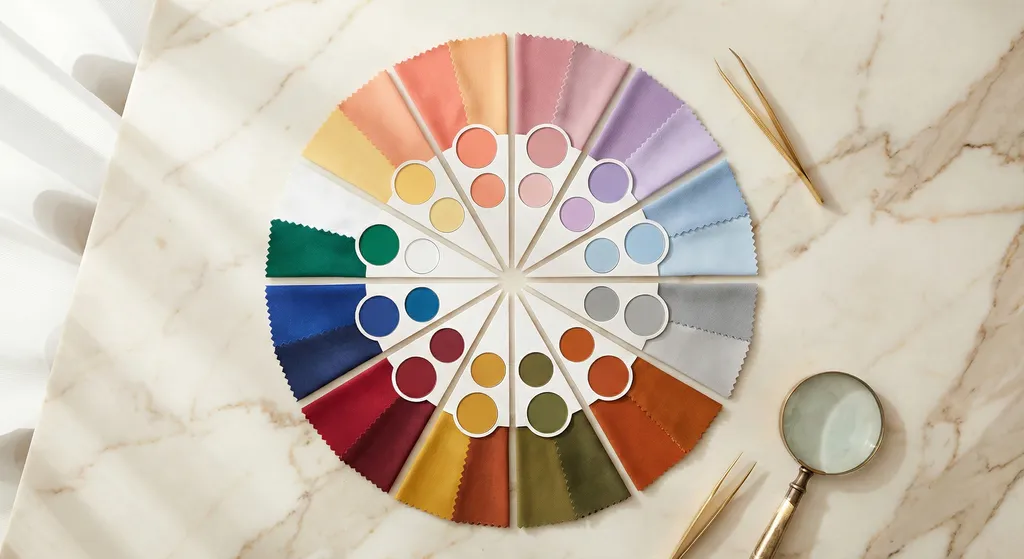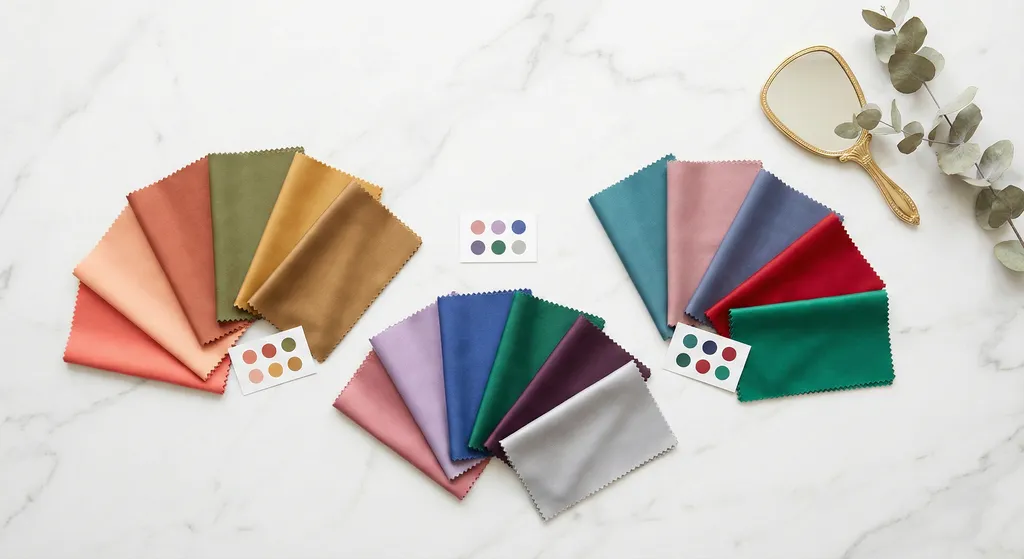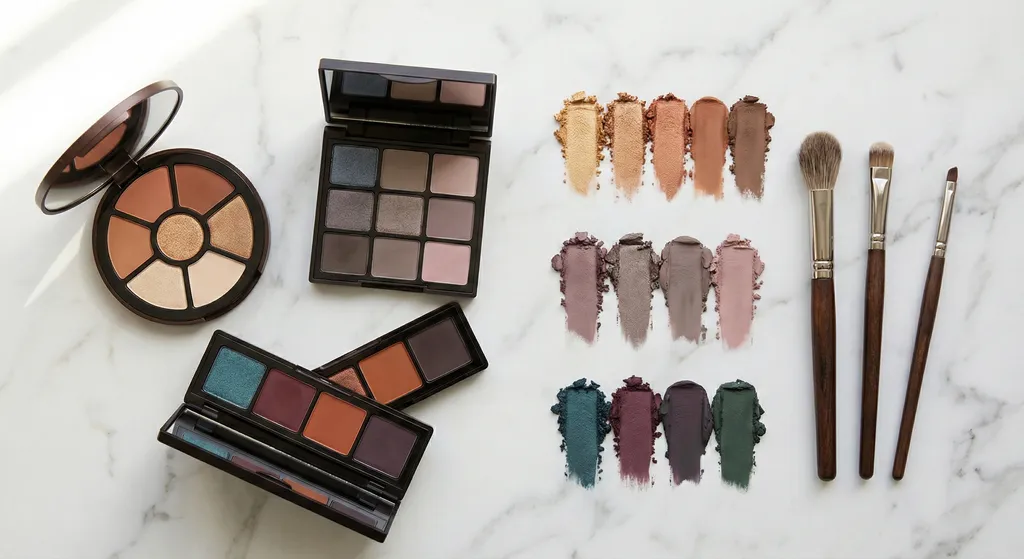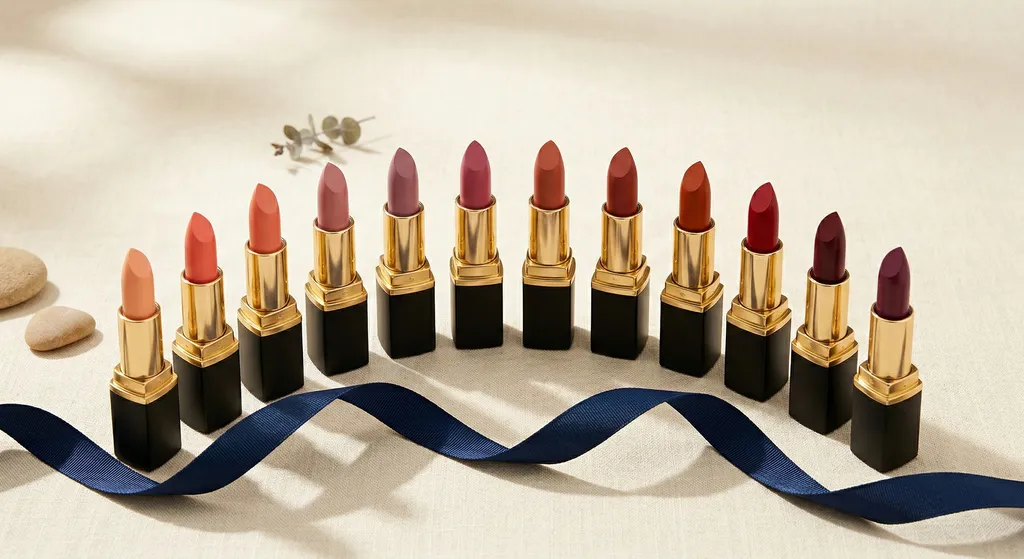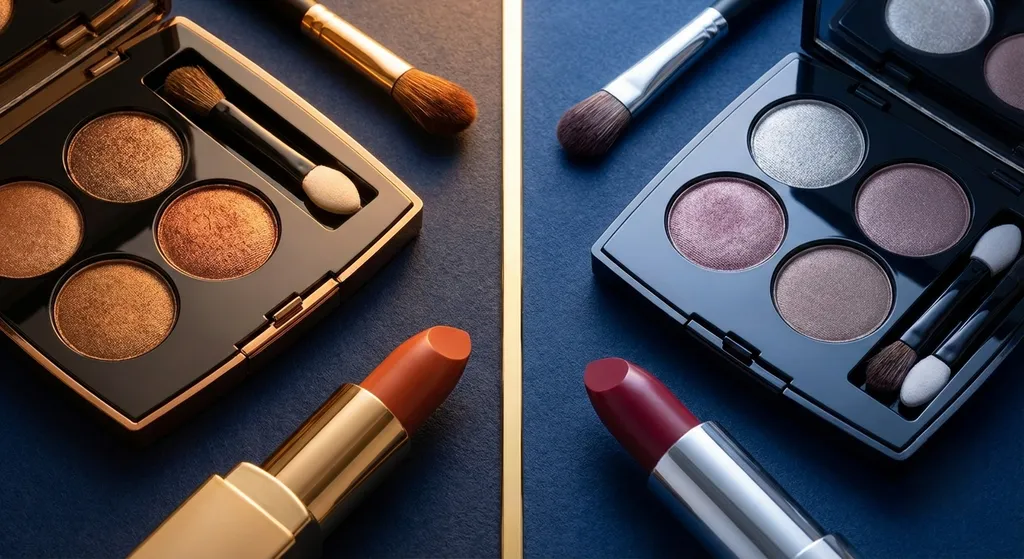
Matching lipstick to your eyeshadow look starts with your color season. Your season defines the correct temperature and intensity for every shade, narrowing your lip options before you even pick up a tube. From there, use the bold-versus-soft balance to decide which feature leads. When every shade belongs to your season's palette and the intensity hierarchy is clear, the pairing looks polished instead of random.
You just spent twenty minutes blending the perfect smoky eye. The gradient is seamless, the shimmer is catching light in exactly the right spot, and the outer corner is flawlessly diffused. You reach for a lipstick, apply it, look in the mirror, and something feels wrong. The eye looks gorgeous on its own. The lip is pretty on its own. But together, they are fighting.
The usual suspect when eye and lip clash is the use of shades outside your color season, whether on the eyes, the lips, or both. This often appears as a cool-warm mismatch. That can happen, but not when both shades come from your color season's palette.
Your color season comes first. It defines your contrast range, your most flattering lip families, and the temperature of every shade you wear. Once you know your season, use the bold-versus-soft balance to decide which feature leads and which supports. Your season answers which shades; the balance framework answers how much of each.
Discover your color season with BeautySparkThe One-Feature Rule: Bold Eye or Bold Lip
The foundational principle in makeup is simple: let one feature lead. Your face has finite visual space, and two bold features create a competition that dilutes the impact of both. When you apply this principle deliberately, the result is a look with a clear focal point and a quiet support structure around it.
There are four approaches to the bold-vs-soft dynamic, and each produces a distinct effect.
Bold Eye, Softer Lip
This is the classic approach, and it works because the eye naturally draws the viewer's gaze first. A dramatic smoky eye, a cut crease, or a vivid color wash commands attention. When the lip is soft (a seasonal nude, a sheer wash, a muted shade from your palette) it provides a clean baseline that lets the eye work without competition.
What "soft lip" means in practice: not necessarily colorless. A muted berry from your season is soft relative to a bold cobalt eye. A warm nude from your season is soft relative to a dramatic smoky eye. You are looking for a difference in visual weight, not necessarily in color darkness.
This pairing is the most forgiving and the easiest to execute. When in doubt, default here: bold eye, soft lip in a shade from your season's palette.
Bold Eye, Bold Lip (The Editorial Approach)
Breaking the one-feature rule is entirely valid, but it requires both features to be in complete agreement. A bold cool smoky eye with a vivid cool red lip if you are a cool season, and a deep warm bronze eye with a rich terracotta lip if you are a warm season, both drawn from your seasonal palette, can look stunning when both features share the same seasonal temperature and both are executed at a similar level of craft and finish.
The key conditions: same undertone across both features, both executed to the same finish standard (both sharp, both blended, both intentional), and the rest of the face kept minimal. Editorial looks work because everything else (skin, brows, cheeks) is quiet. Two bold features with heavy blush and contour tips into chaos.
High-contrast seasons (Bright Winter, Bright Spring, Dark Winter, Dark Autumn, and True Winter) can carry two bold features more easily because their natural coloring has the visual weight to match. For lower-contrast seasons, the editorial approach requires more careful calibration.
Soft Eye, Statement Lip
This is the most versatile pairing of all. A minimal eye (soft liner, a natural shadow wash, bare lids with mascara) gives a bold lip the room to become the entire story. The blank canvas of a quiet eye look makes a vivid lip feel intentional, not overwhelming.
This pairing is also the fastest to execute. A clean face, mascara, and a vivid lipstick in your season's most flattering shade takes under five minutes and looks completely polished.
Monochromatic (Same Color Family on Eyes and Lips)
The monochromatic approach works differently from the other three. Instead of creating contrast between features in terms of intensity, it creates harmony through color repetition within your season's palette.
A warm mauve eye with a dusty warm rose lip, both from your seasonal color palette if you are a warm-leaning season. A cool berry eye with a muted cool plum lip, both from your seasonal color palette if you are a cool-leaning season. The same color family echoed across both features.
The result looks deliberate and sophisticated when executed well, and a little flat when the shades are too similar in depth. The key is variation in value (depth/lightness) within the same hue family. The eye look can be the deeper, more built-up version while the lip carries a softer, lighter shade of the same family, or vice versa.
Let one feature lead and one support; if both feel equally bold, dial one back.
The Fastest Rule
If you are unsure whether your lip and eye combination is working, cover the lower half of your face and look at just the eyes. Then cover the upper half and look at just the lip. If both feel like they are at the same volume, one needs to step back. If one is clearly the star, you are in good shape.
How Your Color Season Sets the Contrast Limit
Your color season is the foundation for every makeup decision, including how much intensity and contrast your overall look can handle before it starts to overwhelm your natural coloring. The bold-vs-soft balance plays out differently depending on your season, which is why you identify your season first and then choose your pairings within it.
High-contrast seasons (Bright Winter, Bright Spring, Dark Winter, Dark Autumn, and True Winter): These seasons have strong natural contrast between skin tone, hair, and features. Their coloring has the visual weight and definition to support bold eye makeup and a bold lip at the same time without looking chaotic or disconnected. They can comfortably wear two striking features together, and they often look most powerful when the foundation coloring is equally intense (the classic editorial pairing of strong eyes plus strong lips works beautifully here).
Low-contrast seasons (Soft Summer, Soft Autumn, Light Summer, Light Spring): These seasons have naturally softer, more blended coloring with gentler transitions between skin, hair, and eyes. Wearing a bold eye and bold lip simultaneously tends to overwhelm their delicate contrast. For them, the one-feature rule is especially important: choose a clear lead and let the other feature support it softly. The payoff is lovely.
Medium-contrast seasons (True Spring, True Summer, True Autumn): These seasons sit in the middle with balanced, moderate contrast. They have enough definition to handle some strength in both features, but they look best when at least one is kept in check. A moderately bold eye paired with a rich but not maximum-intensity lip (or vice versa) usually works well. The key is avoiding maximum intensity in both places at once: think a medium-depth smoky eye with a full but non-overwhelming lip color.
Your season also defines what "bold" actually means for you. A "bold lip" on a Bright Winter might be vivid fuchsia or a true blue-red. A "bold lip" on a Soft Summer might be a dusty deep berry that would look barely-there on a Bright Winter. Season calibrates the scale.
Identify your color season first, then choose your pairings within the intensity range it allows.
Five Lipstick-to-Eyeshadow Pairings That Work
Here are five specific look pairings that demonstrate the bold-vs-soft principle in practice, along with the undertone coordination that makes each work.
| Pairing | Eye | Lip | Best Seasons |
|---|---|---|---|
| Smoky Eye + Nude Lip | Bold | Soft | All seasons |
| Cut Crease + Glossy Berry | Bold | Medium | High-contrast cool seasons (Bright Winter, True Winter, Dark Winter); also True Summer |
| Minimal Liner + Matte Bold Lip | Soft | Bold | All low-contrast seasons; also True Autumn, True Spring, Bright Winter |
| Warm Monochromatic | Medium | Medium | Spring and Autumn families |
| Cool Monochromatic | Medium | Medium | Summer and Winter families |
Smoky Eye + Nude Lip
The classic balance. A deep smoky eye (whether cool charcoal or warm bronze, depending on your season's temperature) works best when the lip is its quiet opposite, chosen from your season's palette. The nude grounds the look and keeps all visual focus on the eye drama.
Both halves of this pairing should come from your season's palette. Your season decides whether your smoky eye reads cool (charcoal, cool plum, cool gray) or warm (bronze, copper, warm brown), and the matching nude should be drawn from the same temperature inside that palette: a cool nude (pink-leaning, slightly mauve) for a cool smoky eye, or a warm nude (peachy, tawny) for a warm one. A "nude" pulled from outside your season's range will undercut the look even though it reads as soft.
Cut Crease + Glossy Berry
The elevated editorial. A cut crease (sharp-lined, architectural) is a precision eye look that benefits from a lip with presence. A glossy berry from your season's cool family adds color interest at the lips while the sharp geometry of the eye remains the structural anchor.
This pairing works because the glossy finish on the lip is visually lighter than the matte precision of the eye, even though the berry color is not "soft." The contrast is in finish and structure, not intensity: the eye is sharp and detailed; the lip is a wash of glossy color. Both are visible features, but they operate in different registers.
Best seasons for this pairing: True Summer, True Winter, Bright Winter. These are seasons whose cool, clear coloring makes glossy berry lips look natural and vibrant.
- Prime the lid, then blend cool taupe matte #9A8A90 through the socket as the transition shade, keeping the top edge soft where it meets the brow bone.
- Deepen the outer third and the socket line with charcoal plum #4C3F4A, building in thin layers so the crease reads as a defined line with a clean upper border.
- Carve the cut crease with a flat synthetic brush and concealer or a pale cream base, drawing a sharp edge along the lid that stops just under the socket line you built.
- Press pale cool pearl #DCD7DE onto the carved lid with a flat brush, patting the shimmer in so the edge you cut stays intact.
- Line the upper lash line with soft black #1B1A1F in a short wing, tightline the upper waterline, and add two coats of black mascara or a full lash strip.
- Finish with a glossy cool berry #8E3A59 lip applied straight from the wand, so the wet shine sits against the matte precision of the eye.
Cut Crease + Glossy Berry Palette
Best Colors
Accent Colors
Minimal Liner + Matte Bold Lip
The effortless statement. The quietest possible eye look (a thin line at the lash base, mascara, bare lids) serves as a blank canvas for a matte bold lip from your season's palette. No shimmer, no smoke, no drama above the cheekbones. All the color lives at the mouth.
The matte finish on the lip is important here. A glossy bold lip on top of an already-bare eye can look undone or lip-focused in a distracting way. A matte lip in a shade your season supports looks deliberate and polished, like the color was chosen, not just applied. This is the go-to pairing for anyone who wants maximum color impact with minimum eye prep time.
Best seasons for this pairing: True Autumn (terracotta), True Spring (warm coral), Bright Winter (vivid blue-red).
- Even out the lid with a warm buff matte #D8BFA6 washed from the lash line to the crease, enough to neutralize redness and give the lashes a clean background.
- Draw one thin line of warm brown #7A4A32 as close to the upper lash base as you can get it, with no wing and nothing on the lower lash line.
- Curl the lashes and add a single coat of brown mascara, which defines the eye while keeping the weight low enough for the lip to lead.
- Line and fill the lips with a matte terracotta #C4623A, working from the center outward and pressing the edges clean with a small brush.
- Blot once and reapply a thin second layer, so the matte finish sits even and holds up as the only strong color on the face.
Minimal Liner + Matte Bold Lip Palette
Best Colors
Accent Colors
Warm Monochromatic (Bronze Eye + Warm Nude)
The tonal harmony look for Springs and Autumns. A warm bronze or copper eye (shimmer on the lid, warm brown in the crease) paired with a peachy-nude or warm rose lip from your season's palette. Everything lives in the warm family and in a similar depth range, creating a cohesive glow that feels sun-kissed instead of made-up.
- Wash warm champagne gold #E3C08C across the whole lid and up to the brow bone, so every shade layered on top reads warm.
- Pat warm bronze shimmer #B07A4E onto the mobile lid with a flat brush, concentrating it at the center of the lid where the light lands.
- Blend soft warm brown matte #8A5A3C through the crease and a little into the outer corner, keeping every edge diffused.
- Smudge warm brown #6B3F2A along the upper lash line and the outer half of the lower line, then soften it with a small pencil brush.
- Curl the lashes and add brown or black-brown mascara. Black liner would break the warm harmony this look depends on.
- Finish with a peachy warm nude #C68E6E lip, a step lighter than the bronze on the lid so the two shades sit in the same family at different depths.
Warm Monochromatic Palette
Best Colors
Accent Colors
The trick with warm monochromatic looks is ensuring the lip looks slightly different in hue from the eye: not copying the lid color, but echoing the family. A warm nude with a bronze shimmer eye feels harmonious; the exact same bronze shade on the lid and lip would feel like an accident.
Cool Monochromatic (Mauve Eye + Cool Berry)
The sophisticated cool pairing for Summers and Winters. A soft mauve or dusty plum eye (matte transition, subtle shimmer on the lid) alongside a cool berry lip from your season's palette. Both features are in the red-pink-purple family, but different in depth and finish. The eye is soft and diffused; the lip has more saturation and definition.
- Sweep soft mauve matte #9E6B7B through the crease and out toward the socket as the transition shade, building it in thin layers.
- Deepen the outer corner and the crease line with dusty plum #7A5566, then blend upward until there is no visible edge left.
- Press mauve-pink satin #C4A0AE onto the lid with a flat brush for a low sheen that keeps the eye soft.
- Smudge cool plum-brown #4E3742 along the upper lash line and under the outer lower lashes, diffusing it with a pencil brush.
- Add one or two coats of black-brown mascara to define the lashes while the shadow stays diffused.
- Finish with a cool berry #8E3A59 lip in a satin or cream finish. It carries more saturation than the eye, which is what gives the pairing its focal point.
Cool Monochromatic Palette
Best Colors
Accent Colors
Every pairing works because one feature leads, both share a seasonal temperature, and the finishes complement rather than compete.
How to Match Lipstick and Eyeshadow Undertones
Match the undertones of your makeup to your specific color season. Winters and Summers wear cool shades, while Springs and Autumns wear warm shades. Your season has already decided the temperature for you, so undertone matching is really about staying within the range your season defines.
This does not mean identical shades or even identical hue families. A cool smoky eye (charcoal, cool gray) can pair with a cool berry, a cool nude, or a vivid blue-based red, as long as all of them belong to your season's palette. All are very different colors, but all share the same seasonal temperature. The consistency in undertone is what your brain registers as "these belong together."
What Makes a Lipstick Cool or Warm
A cool-toned lipstick has a blue, pink, or purple base underneath the visible color. Cool reds are blue-based: think classic crimson or cherry. Cool nudes lean pink or mauve, not peachy. Cool berries and plums are the most obviously cool shades.
A warm-toned lipstick has an orange, yellow, or red base. Warm reds look slightly tomato-like or brick-adjacent; you can see the orange in them. Warm nudes lean peachy or tawny. Corals, terracottas, and warm browns all sit in this family.
The easiest check: swatch the lipstick on the back of your hand and compare it alongside something you know is cool (a silver ring) and something you know is warm (a gold ring). You will see which direction it pulls.
Cool-Toned Lip Shades Palette
Best Colors
Warm-Toned Lip Shades Palette
Best Colors
Choosing shades from your season will always produce a harmonious result. Shades outside it will not. The intensity balance framework above takes you from "harmonious" to "intentional."
Matching Lipstick to Your Color Season
Your color season is the foundation for every shade choice in this article. It determines not just which eye looks suit you; it also defines your most flattering lip palette. Each season has a characteristic combination of temperature, saturation, and contrast level that maps directly to specific lipstick shade families.
Spring Family (Bright, True, Light Spring)
Spring seasons share warm, clear coloring. The most flattering lip shades are warm-toned with noticeable brightness: peachy nudes, warm corals, and orange-based reds.
Spring Family Lip Shades Palette
Best Colors
Explore the Spring seasons: Bright Spring · True Spring · Light Spring
Summer Family (Light, True, Soft Summer)
Summer seasons share cool, muted coloring. The most flattering lip shades are cool-toned and low-saturation: muted pinks, cool nudes, mauve roses, and dusty berries.
Summer Family Lip Shades Palette
Best Colors
Explore the Summer seasons: Light Summer · True Summer · Soft Summer
Autumn Family (True, Soft, Deep Autumn)
Autumn seasons share warm, muted coloring with earthy richness. The most flattering lip shades are warm-toned and grounded: terracottas, brick reds, and peachy nudes.
Autumn Family Lip Shades Palette
Best Colors
Explore the Autumn seasons: True Autumn · Soft Autumn · Deep Autumn
Winter Family (True, Deep, Bright Winter)
Winter seasons share cool, high-contrast coloring. The most flattering lip shades are cool-toned, deep, or vivid: blue-based reds, deep wines, cool berries, and vivid fuchsias.
Winter Family Lip Shades Palette
Best Colors
Explore the Winter seasons: True Winter · Deep Winter · Bright Winter
Your season defines "bold" and "soft" on your personal scale; use its palette as the foundation for every lip choice.
Discover Your Perfect Eye Look
Get your first AI-personalized look in under 5 minutes.


How to Pair Lipstick Finish with Eyeshadow Texture
Beyond intensity and temperature, the finish of your lipstick interacts with the finish of your eyeshadow. Getting this wrong can make an otherwise well-matched look feel heavy or visually confused.
Shimmer or foil eye + matte lip: The classic professional pairing. The matte lip grounds the look while the shimmer eye provides all the visual interest and movement. This is the default choice for events, evening looks, and any time you want the eye look to be the clear subject. The contrast in texture reinforces the contrast in intensity: the eye is active; the lip is still.
- Lay a sticky cream base or a tacky primer across the mobile lid, which is what gives a foil shade its smooth, unbroken finish.
- Press champagne foil #C9C0B2 onto the lid with a flat brush or a fingertip, packing it on in one dense layer and leaving the edges for the next step.
- Blend cool taupe matte #8B7C7E through the crease to soften the top edge of the foil and give the lid somewhere to fade into.
- Smoke charcoal #38323A along the outer corner and the upper lash line, pulling it slightly outward, then tightline and build black mascara.
- Do the under-eye cleanup once all the foil fallout has landed, so the lower lash line ends up crisp.
- Finish with a matte blue-red #C41E3A lip, kept flat and even so all of the shine stays at the eye.
Foil Eye + Matte Lip Palette
Best Colors
Accent Colors
Matte eye + glossy lip: Fresh, modern, and increasingly popular. A matte eye look (precise cut crease, smoky matte diffusion, or graphic liner) keeps the upper face structured and clean. A glossy lip adds a single point of shine and life without competing with the eye. This pairing works particularly well for daytime and lifestyle wear because the glossy lip looks youthful and effortless.
- Wash warm rose matte #C98A7C over the lid and slightly above the crease with a fluffy brush and light pressure, so the finish stays powdery and soft.
- Blend soft cinnamon matte #B5765C into the crease and the outer corner for a little depth, keeping the edges diffused.
- Smudge warm brown #7D4B36 into the upper lash line with a pencil brush, then run a trace of it under the outer third of the lower lashes.
- Curl the lashes and add brown mascara, leaving the lid free of shimmer so the whole eye stays matte.
- Finish with a glossy warm coral #E87461 lip, pressing the color in first and adding the gloss on top so the shine gathers at the center of the mouth.
Matte Eye + Glossy Lip Palette
Best Colors
Accent Colors
Glitter or foil eye + matte stain: When your eye is wearing full-coverage glitter or a foil metallic, even a matte lip needs to recede in terms of visual complexity. A matte stain (long-wearing, even coverage, no shine) keeps the lip presence without adding texture to an already texture-heavy look. Avoid glossy or satin lip finishes here; they pull the eye down toward the mouth when the upper face is already at maximum shine.
- Prime the lid and press cool gray matte #8D8C96 across it as a base, so any gap in the glitter reads as shadow.
- Pat a thin layer of glitter glue over the lid, wait for it to turn tacky, then press silver glitter #C9CDD4 on with a flat brush or a fingertip.
- Take the same silver glitter #C9CDD4 into the inner corner and along the inner third of the lower lash line to open the eye.
- Draw a sharp wing in black #14131A liquid liner once the glitter has set, anchoring your elbow and pulling the line in short connected strokes.
- Clean up the fallout under the eye, then add a full lash strip or several coats of black mascara.
- Finish with a matte blue-red #C41E3A lip stain, blotted in for even coverage and left bare of gloss or balm.
Glitter Eye + Matte Lip Stain Palette
Best Colors
Accent Colors
Natural or satin eye + any lip finish: A natural eye look (light shimmer wash, minimal liner, soft diffused shade) is the most texture-neutral canvas. It doesn't look specifically matte or shimmer, so the lip finish is free to go in any direction without clashing. This is the most flexible pairing, and it is one of the reasons a natural eye is the best base for a statement lip.
- Wash cool satin taupe #A9989A over the whole lid in a single sheer pass, enough to read as definition without reading as color.
- Blend soft cool brown #776068 lightly through the crease, stopping well short of the brow bone so the eye stays open and quiet.
- Tap champagne pink satin #DCC6C8 into the inner corner and the center of the lid for a small amount of light.
- Tightline with soft brown-black #2B2529 and add one coat of mascara, so the lash line is defined with nothing drawn on the outside.
- Finish with a vivid cool fuchsia #C8385A lip applied with a brush for a clean edge, which is where the whole look lives.
Natural Eye + Statement Lip Palette
Best Colors
Accent Colors
Matte eye + matte lip: This is the most demanding combination. All-matte can look flat or heavy because there is no texture contrast anywhere on the face. If you want to go all-matte, add one small element of shine elsewhere (a touch of highlighter on the cheekbones, a shimmer inner corner highlight) to break up the uniformity and add dimension.
- Wash matte terracotta #C4623A across the lid and just above the crease with a fluffy brush, building it in thin layers.
- Deepen the crease and the outer corner with matte warm brown #7E4A33, blending until the two shades meet with no line between them.
- Take matte warm peach #E0B08C under the brow and into the inner corner to lift the eye while the finish stays flat.
- Smudge the same warm brown #7E4A33 along the upper lash line and the outer lower line, then add brown mascara.
- Add the one point of shine an all-matte pairing needs: a light sweep of champagne highlighter #EBD5B8 on the tops of the cheekbones.
- Finish with a matte warm brick #A0522D lip, which sits at the same depth as the crease shade and keeps the look tonal.
Matte Eye + Matte Lip Palette
Best Colors
Accent Colors
Use texture contrast the same way you use intensity contrast: one surface catches the light, the other stays quiet.
Common Lipstick-Eyeshadow Mistakes to Avoid
Leading with balance before checking your color season. Deciding which feature is bold before confirming that every shade belongs to your season means you might nail the intensity hierarchy but still look off because the colors are wrong for your coloring. Start with your season's palette, pick shades from it, then apply the bold-vs-soft balance. If a shade sits outside your season, it will not work, regardless of how well the rest of the look is balanced.
Copying a single eyeshadow shade with the lip. Coordinating your lip to the overall eye look, not to one specific shadow shade, is the right approach. If your lid shimmer is a dusty mauve, the lip does not need to be that exact dusty mauve. That would look like costume instead of coordinated. A complementary shade in the same cool family, at a different depth, works far better.
The warm nude default. Many people have one everyday nude that they reach for regardless of the eye look or their own undertones and color season. If that nude is peachy-warm but your undertones are cool, there is a constant friction in every look you build, no matter how well you balance the intensity. The same is true for the opposite: if you have warm undertones and a cool nude lipstick, you will get the same friction. You can rely on one nude for most looks, but it must match your undertone.
Mismatching finish at the wrong moment. Applying a glossy lip to a heavily shimmer-laden eye look, or using a matte lip under an already-matte smoky eye with no other texture anywhere, are the two most common finish mistakes. Let texture contrast do what intensity contrast does: create a foreground and a background.
Start with your season, pick shades from its palette, then apply the bold-vs-soft balance to decide which feature leads.
Frequently Asked Questions
Discover Your Perfect Eye Look
Get your first AI-personalized look in under 5 minutes.